ShanghaiDoctor - Where China's Healing Wisdom Shapes Modern Medicine

Update time:2026-10-15Visits:520
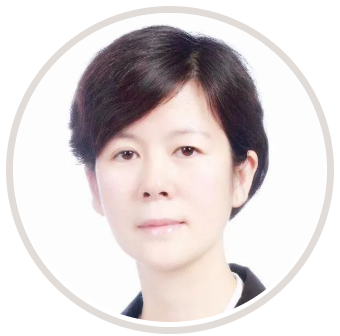
“Anyone willing to learn, I will teach. Medicine belongs to everyone. It is not a private collection.”
— Jiang Liping
Jiang Liping is Associate Chief Nurse—a senior professional nursing rank in China, one step below Chief Nurse—and a speech therapist at Shanghai Ninth People’s Hospital, part of the team in craniofacial surgery there that treats speech disorders linked to cleft palate. She is a member of the cleft lip and palate speech expert panel of a China Population Welfare Foundation charity program. Born in 1964, she assesses, diagnoses, and treats functional speech disorders and those that follow cleft palate repair, velopharyngeal insufficiency (when the soft palate cannot close off the nose from the mouth during speech), and velocardiofacial syndrome. She developed a method for abnormal speech that combines teaching through Hanyu Pinyin, the standard romanization used to teach Chinese pronunciation, with behavioral elicitation techniques.
She has shared, as third and fifth contributor, a second-prize and a third-prize Shanghai Science and Technology Progress Award. She has contributed to four books, wrote the chapter on treating abnormal cleft-palate speech for the Smile Train training materials for Chinese speech therapists, and is first author of one paper indexed in the Science Citation Index and eight in Chinese core journals. She has contributed to one expert consensus statement and two expert debate papers, has been an invited speaker at Smile Train international meetings and national cleft conferences, teaches every year at continuing-education courses around the country, reviews for several journals, and has trained thirty-five speech therapists from other provinces one-to-one.
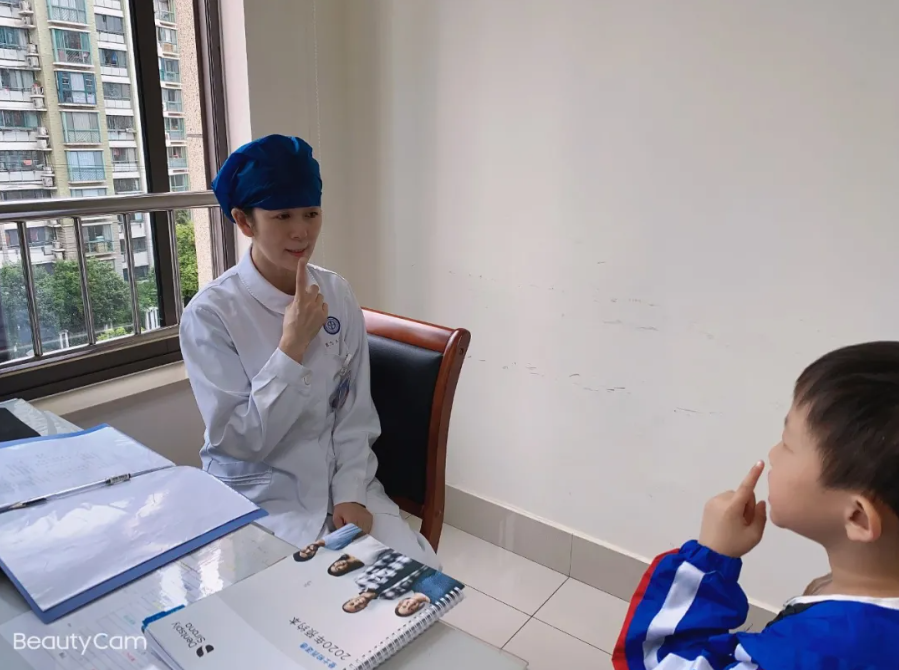
In a video, a shy six-year-old girl from Anhui reads one sentence three times: “Is anyone home?” The first time it is almost impossible to understand her. By the third, every word is clear, no different from anyone else’s speech. The three recordings were made three months apart.
The girl had velocardiofacial syndrome, which affects about one person in four thousand. Before treatment she was lonely and withdrawn; no other children would play with her, and with her distinctive facial features some treated her as a freak. After a pharyngoplasty, an operation to help the soft palate close, came speech therapy. Now, Jiang says, she will leave the mountains, study, work, fall in love, marry, and teach her own child to talk.
Over more than twenty years Jiang has treated close to three thousand patients. In the busy winter and summer school holidays she has more than once thought of leaving, and each time the faces of parents and children held her back. Sometimes, she says carefully, she feels she has done something remarkable: patients with difficult speech disorders who could not be helped elsewhere get good results here. The training textbook and treatment method she spent more than a decade developing are now treated by many colleagues as a standard, in a field that started late in China. She does not keep them to herself.
She is a nurse in an ordinary post who became, in the phrase the Chinese title borrows from Florence Nightingale, the one who carries the lamp. The interviewer, writing about her, recalled a line from the novelist Wang Xiaobo: it is not enough to have only this life and this world; a person should also have a poetic world. Her work, the interviewer thought, was that poetic world.
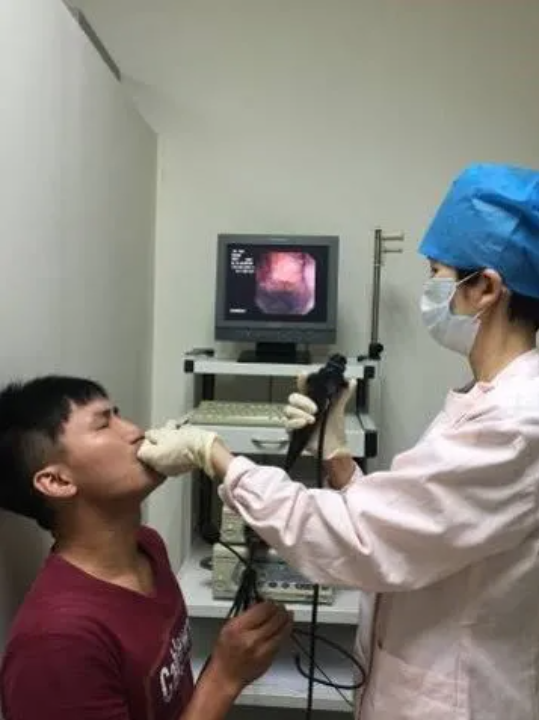
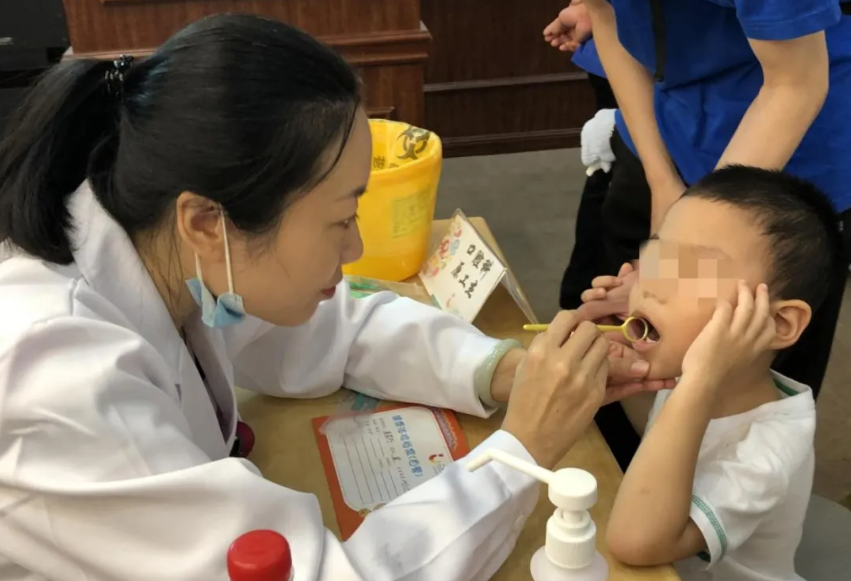
Twice a week Jiang runs a specialist speech clinic for new patients. She examines the speech organs, including velopharyngeal closure by nasopharyngeal fiber-optic endoscopy, assesses speech, and makes a diagnosis. All her remaining time goes to therapy. About 70 percent of patients come from outside Shanghai. Most begin at four or five, around school age.
Speech disorders fall into two kinds. Functional disorders occur in children with normal anatomy who have formed bad articulation habits—what people in China casually call a “big tongue.” Speech matures around four, and if the habits remain, most errors are in tongue placement. These children are relatively easy to treat; a course of about ten sessions usually brings clarity to normal. A tongue-tie on its own accounts for very few cases, and if it is clipped after a child has learned to talk, the habit is already formed and therapy is still needed.
Organic disorders are the hard ones. After cleft palate repair with velopharyngeal insufficiency, or in velocardiofacial syndrome, children usually have a pharyngoplasty at four or five. Surgery improves the anatomy, but the habit does not change, and hypernasal speech persists: a child who could not be understood before the operation often still cannot be understood after it. Treatment has to correct both where and how a sound is made and strengthen velopharyngeal closure.
Patients come from as far as Xinjiang and Qinghai, though most are from neighboring Jiangsu and Zhejiang. A typical course runs three to six months, the longest about a year: one-to-one, once a week, with daily practice at home, then about three more months of consolidation until correct speech comes without thinking. She treats about a hundred patients a year. Those who complete the treatment and consolidation usually reach more than 90 percent intelligibility and have no trouble in everyday conversation. A very few, living far away, cannot keep it up and stop halfway.
The Ninth People’s Hospital treats more patients with velocardiofacial syndrome than any other hospital in China, and Professor Wang Guomin’s team was the first in the country to treat them with both pharyngoplasty and speech therapy. The syndrome is among the most common human genomic disorders and involves the heart, the throat and palate, the face, and learning ability. Hypernasality is more severe than in cleft palate, and every pressure consonant—z, c, s, j, q, x, b, p, d, t, g, k—drops out: gege, “older brother,” comes out as e’e. Even parents may not understand. Because of the learning difficulties, Jiang adds simple behavioral techniques to elicit each consonant alongside pinyin teaching. These children cooperate less and grasp more slowly, the course is longer, and hypernasality improves somewhat less than in cleft-palate patients, but they too can reach normal or near-normal speech.
A twelve-year-old boy from Zhejiang with the syndrome arrived ashamed. Classmates bullied and mocked him, his mother said; no one would play with him because no one could understand him, his grades were poor, and he often came home crying and did not want to go to school. Over fifteen sessions, each one longer, she taught him the same method again and again until it clicked. He came to read short passages and dialogues clearly, slowly, word by word. Now, he told her, the other children play with him, nobody stares, and his teacher calls on him to answer. A four-year-old boy from Jiangsu, very bright, was speaking like other children after ten sessions after his pharyngoplasty. The younger the child, the shorter the correction—though she does not recommend systematic therapy before four, when attention and cooperation are weak; earlier work can be done at home under a therapist’s guidance.
Years later, the patients sometimes find her. A supermarket cashier once stopped her: her daughter, treated in 1997 at six for congenital velopharyngeal insufficiency with no pressure consonants at all and severe hypernasality, was now in the third grade and the class representative for English, and no one could tell her speech from anyone else’s. On a bus a young man of twenty called out to her; he had once been unable to find suitable work because his speech was unclear, and now had a job he liked. A girl from Wenzhou she treated after cleft palate surgery came back twenty years later as a university student, and Jiang barely recognized her.
The stakes are concrete. Older patients, university students among them, cannot find work because of their speech; younger ones are turned away by the kindergartens and primary schools their parents hoped for. When a course ends, the joy of the children and parents is hard to describe. Parents often tell her they never thought this day would come: no one stares at their child strangely anymore, and however far they traveled, it was worth it. A little effort on her side, she says, puts a child back on the same starting line as everyone else. That is her sense of achievement, and the best gift a patient can give her.
Jiang left high school in 1981 for the nursing school attached to the Ninth People’s Hospital of what was then Shanghai Second Medical College. Twice named a model student and graded excellent in every placement of her clinical year, she was assigned to oral and maxillofacial surgery, a national key discipline. Her generation, she says, was raised with a sense of mission, conscientious and dutiful. In 1986 she was selected for the department’s new intensive-care unit after a strong result in a citywide nursing theory exam. After a year of full-time study for a nursing exchange that in the end did not take place, she helped doctoral students with cell culture in a dental-caries laboratory, and joined the department’s new imaging laboratory, where she learned computer image processing and nasopharyngeal endoscopy.
In 1993, Dr. Wang Guomin set up a cleft palate speech pathology laboratory and borrowed her for it. That was the turn. Speech pathology—the study of abnormal speech from congenital or acquired causes—was entirely new to her. She began with pinyin teaching and the basics of acoustic phonetics and spectrograms, and under Wang’s guidance learned while treating patients. To fill the gaps in her own training she completed a nursing associate degree in 1997 and a bachelor’s degree in 2006.
There was no domestic theory or method for pathological speech, and ordinary pinyin teaching did not fully fit the abnormal anatomy of cleft palate. She worked it out by treating, accumulating patients and conditions, adding simple behavioral elicitation to pinyin teaching, and keeping what worked best until it formed an ordered system. She went on to contribute to two textbooks on cleft lip and palate sequential treatment and on cleft repair and speech therapy.
Early on she decided there had to be a complete set of training materials. None existed, so she wrote one. Her Speech Training Textbook took years and countless revisions to go from framework to finished form. It is simple, suited to children around school age, and ordered by the sequence in which consonants are trained. Each consonant has its own syllables, phrases, and sentences that do not interfere with one another, so once a child can produce one consonant, all its words and sentences can be read clearly. When x is secure, the child moves to two-syllable words built on it—xiexie (thank you), xiongmao (panda), xingxing (ape)—then to sentences full of x sounds. After all the consonants come combined exercises. Hospitals across the country, including those of therapists she has trained, now use it.
A good speech therapist, she says, has to hear, while the patient is speaking and without seeing inside the mouth, not only that a sound is made wrongly but exactly where—whether the tongue is too far forward or back, too high or low, whether the sound is being made in the pharynx or the larynx—so that the treatment can be targeted rather than fixed. The therapist must also read each child’s temperament to get results in a short session. An eleven-year-old cleft-palate patient once went in ten sessions from dropped consonants to every word and sentence clear—a course that a visiting therapist from Japan remarked would usually take one to two years.
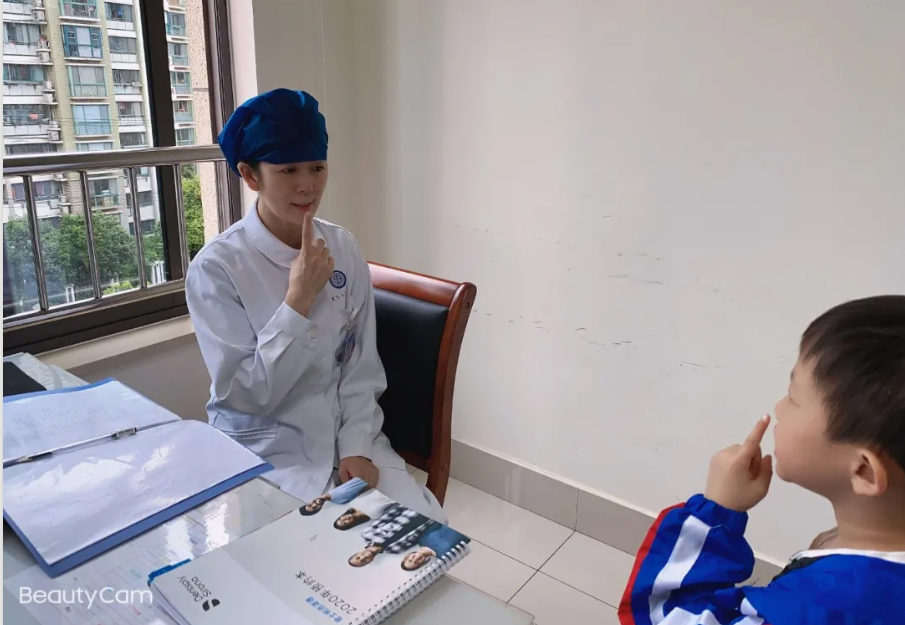
The work is mental and physical at once. With a cleft-palate child, the therapist may rest a hand on the child’s throat so he can feel where a sound is made. More important is coaxing: watch my mouth, copy my voice, copy my movement. A simpler sound the child already makes correctly is used to draw out the one that needs fixing, so the wrong sound does not interfere. Each sound has its trick, some from coordinating the speech organs, some from outside cues and hand gestures. Body, face, and voice all go into drawing that one sound out. In summer holidays she used to see as many as eight children a day, and come home not wanting to say a word.
She keeps stickers and toys as rewards, scolds children who will not cooperate, and sometimes scolds parents who have not practiced at home.

ShanghaiDoctor.cn: Where does so much patience come from?
Jiang Liping: Actually, I am impatient by nature. But I like children, and I can feel what the parents and children are going through, so mostly I give them encouragement and warmth. If you teach them with your whole heart, the children and parents will trust you and treat you as a teacher and a friend. I have plenty of methods—rewards, and firmness when it is needed. Kindness and authority together, all so the training works.
ShanghaiDoctor.cn: Do you teach students now?
Jiang Liping: Not lately, because of the epidemic. In earlier years students came every week in rotation, and I showed slides and videos on assessing, diagnosing, and treating different kinds of abnormal speech. There are very few speech therapists in China, and very few who are expert. Over the years I have trained thirty-five one-to-one from other provinces—nurses, rehabilitation therapists, physicians, graduate students. They go back and start services at their local hospitals, and patients no longer need to travel all the way to Shanghai.
ShanghaiDoctor.cn: What matters most to you now?
Jiang Liping: I would not call it passing on a tradition—I am not at that level. Call it handing on the baton. Anyone who wants to work in this field, I will teach my methods, which may not be found in other books. I also spread them through the books I contributed to, the national continuing-education courses I teach every year, and talks at cleft meetings. Others may not see why the method works the way it does, but my long record of patients shows that it does. I hope there will be more therapists, with better methods, for patients who have nowhere to turn.
ShanghaiDoctor.cn: Are you satisfied with yourself?
Jiang Liping: With work and with life, fairly satisfied. There were setbacks, and there were times I was confused and wanted to leave. It is a kind of tiredness other people do not understand. I thought of leaving several times and could not do it. I am not good at big speeches. In twenty-some years, at every goodbye after a patient is treated—the gratitude in their faces, a child talking on and on with confidence and a smile—that is the moment a family’s fate, a person’s whole life, changes, and I happen to be there. That is what kept me going. The craniofacial department of the Ninth People’s Hospital is among the leaders in China in speech therapy, and patients come from all over the country. As part of that team, with the results of my own years of work, I am satisfied and proud of my career.
ShanghaiDoctor.cn: It is the start of the school year. What would you say to young women at nursing school?
Jiang Liping: A nurse’s work is ordinary, and the social standing is not the same as a doctor’s. But if you have a direction in your heart, treat it as work you love and keep at it, you will find happiness, achieve something, and be loved and respected all the same.
Jiang Liping did not set out to found anything. She was a nurse lent to a new laboratory in 1993, given a subject with no Chinese textbook, and she wrote one, consonant by consonant, xiexie, xiongmao, xingxing. What she measures is not prizes. It is a cashier in a supermarket, a young man on a bus, a girl from Wenzhou she failed to recognize, and a six-year-old asking, clearly, whether anyone is home.
Editor: Chen Qing
If you need any help from Ms. Jiang, be free to let us know at Chenqing@ShanghaiDoctor.cn.
Adapted from the Yewen Renyi (晔问仁医) interview “蒋莉萍 | 语音治疗提灯者,” published on WeChat on 23 September 2020. Facts and titles are as of that date. Jiang Liping is a senior nurse and speech therapist, not a physician; the title omits “Dr.” for that reason.
Dr. Chen Sun | Newborn Heart Intervention, and Staying Young Enough to Be Moved
Dr. Wu Yurong | Fetal Echocardiography, and Kindness as Part of the Job
Dr. Li Dawei | Sphincter-Saving Surgery, and the Operation That Fits the Patient
Dr. Zhang Jian | Laparoscopy, and the Hearth Fires of Ordinary Life
Dr.Sun Jing | Fertility-Sparing Surgery, and a Future Already Here
Dr. Li Qingyun | Sleep Apnea, and Illness Removed Without a Sound
Dr. Zhu Zhiling | Gynecologic Surgery, and a Line She Would Not Cross
Dr. Yuan Gongjie | Children's Smiles, and the Orthodontist Who Still Tells Stories
Dr. Chen Sun | Newborn Heart Intervention, and Staying Young Enough to Be Moved
Dr. Wu Yurong | Fetal Echocardiography, and Kindness as Part of the Job
Jiang Liping | Speech Therapy, and the Lamp She Carries
Dr. Li Dawei | Sphincter-Saving Surgery, and the Operation That Fits the Patient
Dr. Zhang Jian | Laparoscopy, and the Hearth Fires of Ordinary Life
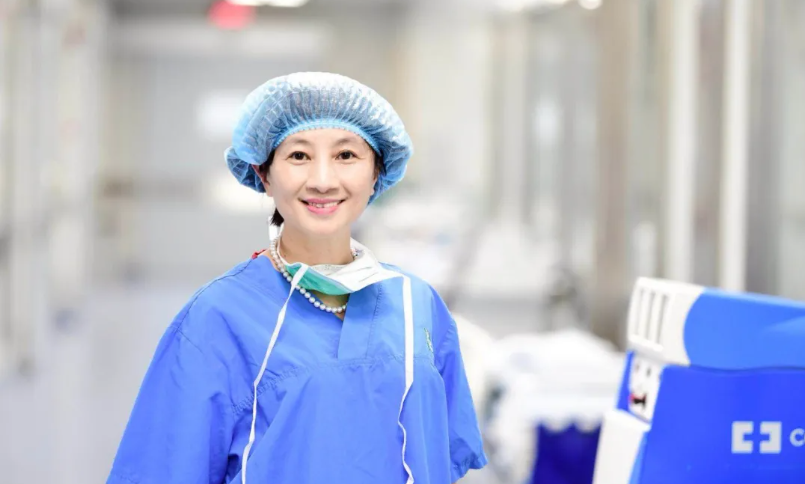
Dr.Sun Jing | Fertility-Sparing Surgery, and a Future Already Here
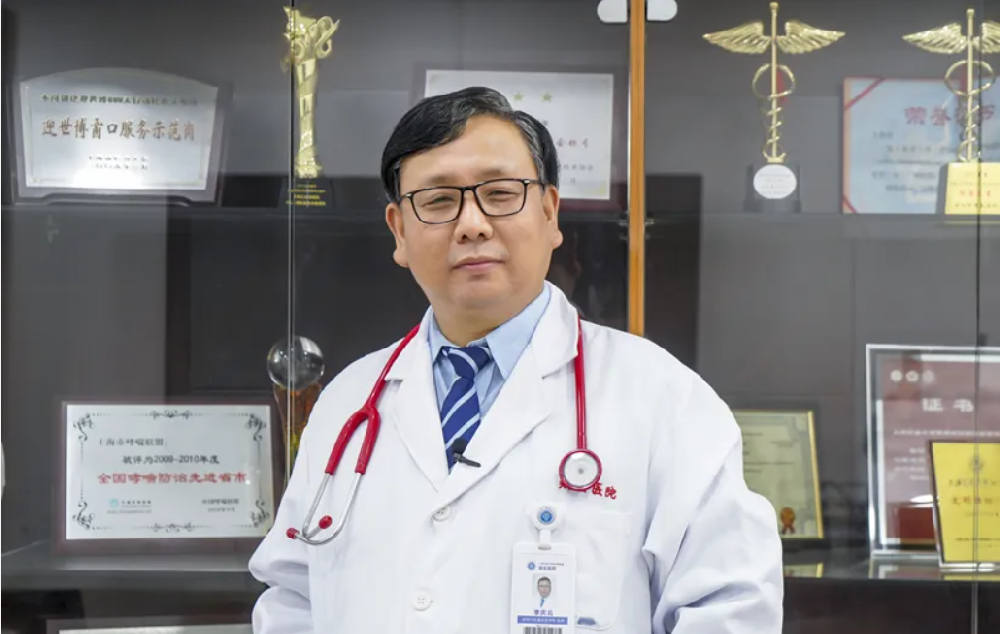
Dr. Li Qingyun | Sleep Apnea, and Illness Removed Without a Sound
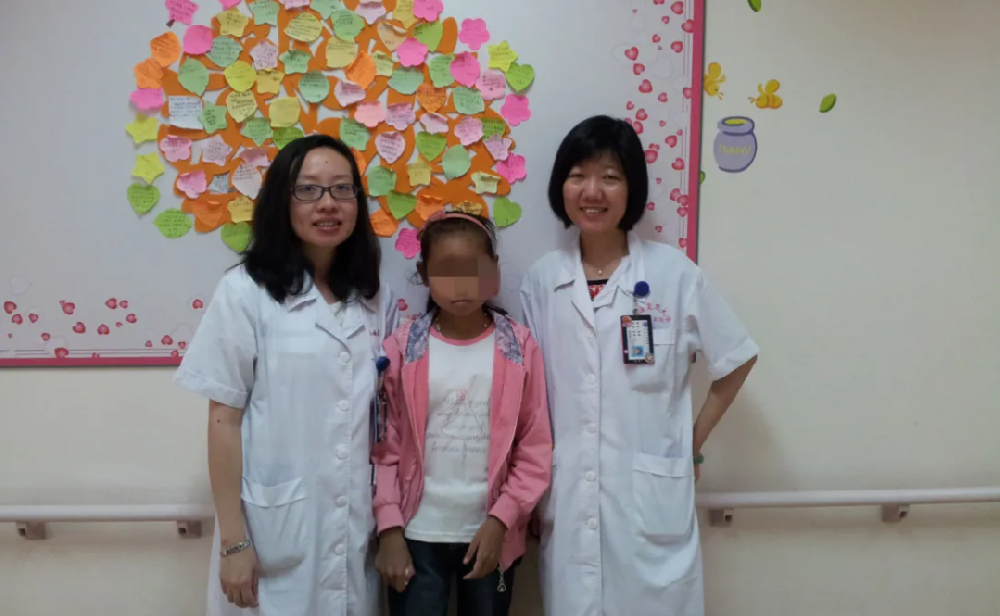
Dr. Shen Qian | Children’s Kidneys, Lucid and Gentle
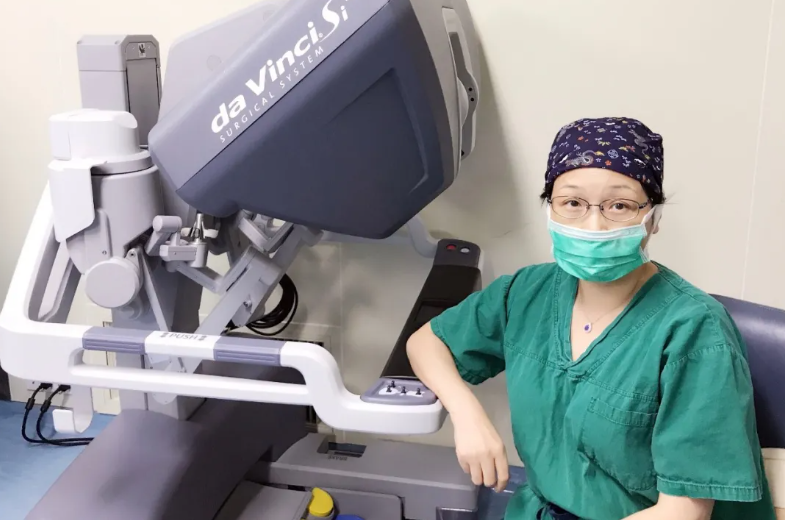
Dr. Zhu Zhiling | Gynecologic Surgery, and a Line She Would Not Cross
Dr. Yuan Gongjie | Children's Smiles, and the Orthodontist Who Still Tells Stories
Copyright © 2023 Yewen Renyi & ShanghaiDoctor.cn (This website is a non - profit medical humanities platform. The information contained herein is solely for biographical and historical purposes and does not constitute any medical advice.) 沪ICP备2023005392号-2 XML 沪公网安备31010902100835号
 中文
中文 English
 Español
 沪公网安备31010902100835号