ShanghaiDoctor - Where China's Healing Wisdom Shapes Modern Medicine

Update time:2026-10-05Visits:417
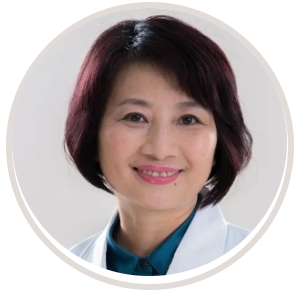
“Work in the weather. Meet people in the sun.”
— Sun Jing
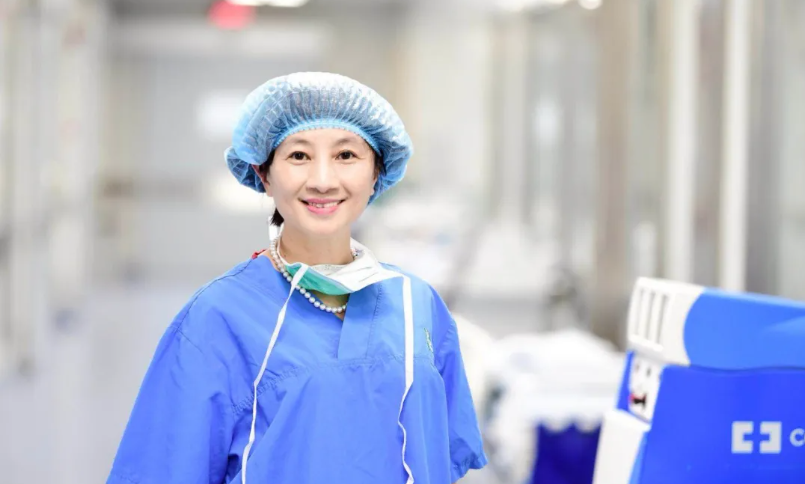
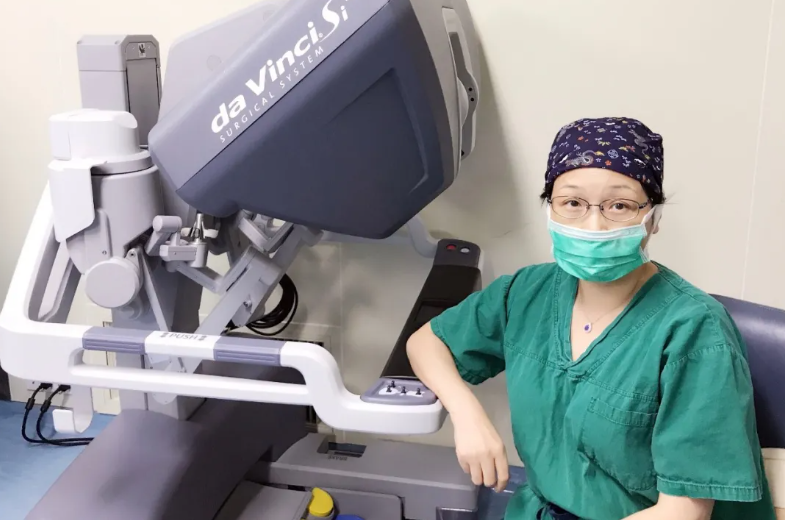
Sun Jing is Chief Physician, Doctoral Supervisor, and Director of Reproductive Surgery at Shanghai First Maternity and Infant Hospital. She has practiced for thirty-one years and done minimally invasive gynecologic surgery for twenty-seven, with more than twenty thousand operations behind her. The work she is known for is fertility-sparing hysteroscopy and laparoscopy: methods that try not to burn the ovary or the lining of the uterus, single-port laparoscopy, and transvaginal natural-orifice surgery, v-NOTES. Her team completed Shanghai’s first gynecologic natural-orifice removal of ovarian cysts and fibroids. Combined two-scope work through the vaginal route is the part she describes as level with the leading international series.
She sits on the obstetrics and gynecology branch of the Chinese Medical Association, chairs the endoscopy group of the Shanghai branch, and has held parallel posts in single-port and NOTES groups. Grants have included a National 863 subproject, the National Natural Science Foundation, and municipal science and hospital-development funds. A Shanghai medical science progress prize lists her as first contributor. She runs repeated courses and simulation camps on single-port surgery and v-NOTES. No long overseas training appears in her own record.
In clinic she is the quieter voice. At the table she is the one who decides. She says the strength was learned, not born. Family illness still happens to doctors, and there is often no hour left for it. She has stayed at the table with an intravenous line in her own arm. More than twenty thousand cases have not made her feel safe. Medicine, she says, eliminates the person who stops.
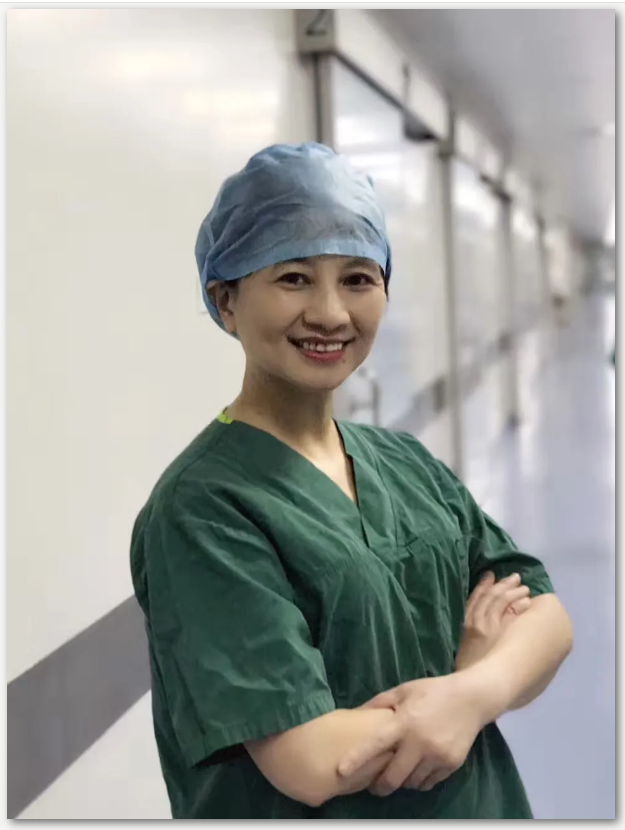
In 1983 she did not want medicine. She had pictured law, or journalism, a trade in which you find out what is true. Textbooks the size of bricks did not suit her. A body on the dissection table, she was sure, would make her faint. Her father insisted. An Aries daughter did not yield either. A month of that, and her mother wrote a long letter through tears. Sun softened. Years later she was grateful. Without his refusal to bend, she says, she would not be the person who now loves the work. The raised hand never came down.
Shanghai Second Medical University took her into the first key class of clinical medicine, with two years of biology at Fudan before the wards. The training was long and narrow. What she had not expected was that medicine was also a way of finding out what is true. Different from the old dream, and heavy enough that she could not put it down. Birds and art had been the earlier loves. The coat, she says, cut the long hair and the doubts together.
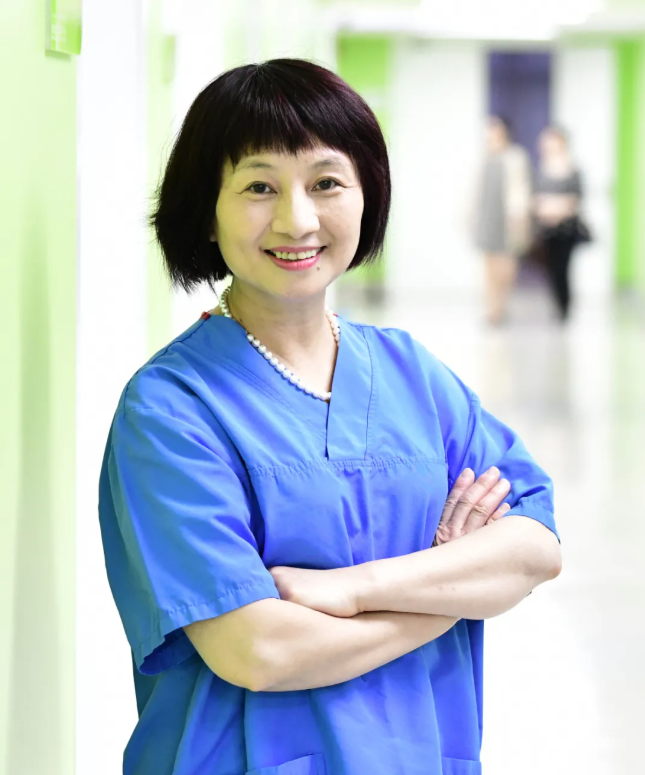
For years a benign tumor in a woman who no longer planned a pregnancy was answered by taking the uterus and the ovaries. Sun does not accept that as the default. Hormones and mood both shift when those organs go. If the tumor is benign, and the outcome and the later life are not put at risk, she would rather the operation be harder and the organs stay. Under the scope that means separating normal tissue from adherent disease, then sewing. Electrocautery stops bleeding quickly and was once the common end of a laparoscopic case. She stopped trusting it. A fibroid bed that has been burned heals poorly. A later pregnancy can rupture the uterus. She spent a long stretch on a simulator, changing how the knot is thrown, until she could teach the stitch she had once only copied.
Laparoscopy, as she teaches it, is three or four openings of half a centimeter to a centimeter. One carries the scope and the camera. The others carry the instruments. The field is magnified eight to ten times. Hysteroscopy uses the same idea through the cervix, and leaves no scar on the abdomen: submucosal fibroids, polyps, a septum, adhesions, a displaced device. The diseases she names for the abdominal route include fibroids, adenomyoma, benign ovarian tumors, endometriosis, ectopic pregnancy, infertility work, and selected early cancers. Minimal invasion, in her later definition, is not the size of the cut. It is cost, recovery, and how soon a woman can return to her life, bought with the least harm. When the case is beyond the ports, she opens. Rare disease goes to a multidisciplinary table. The loneliness, she says, is that for long stretches no one else can do the next move.
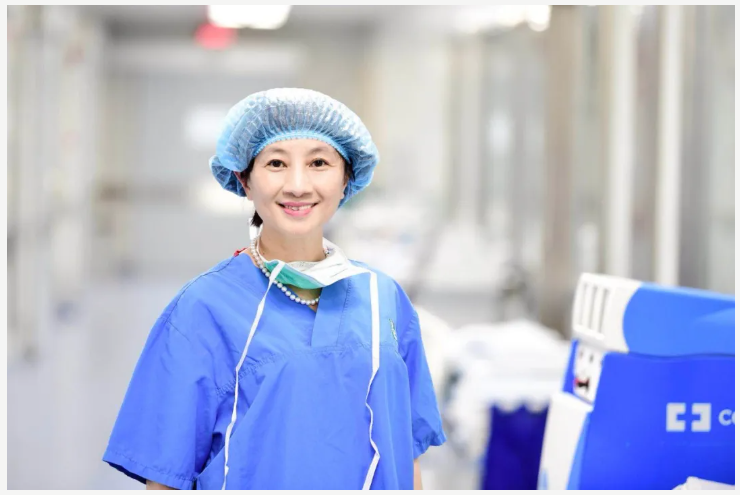
ShanghaiDoctor.cn: Has your sense of minimally invasive surgery changed?
Sun Jing: Yes. The idea is the whole path, not a small incision. Cost, later recovery, all of it has to follow the same rule: the least harm, and a return to ordinary life as soon as that can be honest. There used to be more pain in the work. It is a little better. Minimally invasive surgery is lonely. No one else can take the hard step. If it is truly too hard, conversion to open surgery still has to happen. Complicated and rare disease can go to a multidisciplinary consult.
ShanghaiDoctor.cn: What would you tell someone just entering medicine?
Sun Jing: Be able to stand the quiet. It is like memorizing poems when you are young. You may know them by heart and not yet understand them. Later the same lines mean something else. Holding a retractor, holding the scope, watching a senior operate—you take a different thing from it at each age. Assist more. That is the path. Second, compassion, and no blind confidence. If you always find an excuse for your own error, you will not improve. Third, aim at a technique with no defects. A factory can call one flaw in ten thousand high quality. A person is not a product. Medicine is not perfect, and we will not reach perfect. You still have to demand it of yourself.
ShanghaiDoctor.cn: What counts as a complete treatment?
Sun Jing: A good plan, a successful operation, and a later course that is also good. Think about her future, fertility or the rest of life. Fewer trips between hospitals, less money lost, less pain in the body and the mind. There is no single best plan. There are plans that fit one woman. People like the word precision. I do not quite dare use it. It is relative. If she wants a child, we try to leave her that chance. If the tumor is benign and she does not want the uterus taken, we try to keep it. Some patients are torn. We talk it through more than once, and then we choose.
ShanghaiDoctor.cn: Why do patients trust you?
Sun Jing: I pay attention to feeling, and I learned to listen. A doctor should know some psychology. If the mind has not recovered, the illness is not finished. Women are strongly moved by what is said to them—infertility, the years around menopause, a home with little care, repeated pregnancies that stopped. Stand in their place. Young couples sometimes arrive with both sets of parents. I tell the parents not to press too hard. Too much concern makes the anxiety worse.
ShanghaiDoctor.cn: Do you get anxious?
Sun Jing: Yes. It sits in the work, and it is not the usual weather. I get past it by being stubborn. When someone does not understand, I tell myself: you chose this.
ShanghaiDoctor.cn: After thirty years, what stays?
Sun Jing: Pain and happiness knotted together. I do not dwell on my own pain. I tell patients: think of the person with no feet before you complain that the shoe is too big or too small. Complaining wastes the hour. Do the practical thing. My own line is: work in the weather, meet people in the sun. What has kept me going is conviction. Who asked you to be a doctor? It is a profession of giving. The generation before us included people trained at Harvard, MIT, and Stanford. They left good conditions, came back, and built the services we inherited. Next to that, what are we?
ShanghaiDoctor.cn: What kind of middle-aged woman is most beautiful?
Sun Jing: For me, youth has gone. After so many years of giving, I aged earlier than people my age. Occupational, and full of regrets. Not worth a speech. Doctors do this. I do not want the worst hour shown. I arrange the surface a little. Patients need the steady side. If the doctor folds, they fold further.
ShanghaiDoctor.cn: Is there a regret that is largest?
Sun Jing: Yes. When my father was dying, I was still at the operating table. That guilt does not leave. At the end he was fragile. I had kept the picture of him as strong, and I still asked that of him. By then he was old and ill, and he needed care. Years after he was gone I understood. Perhaps because I am older too.
Sun Jing’s future is the operation that used to be a story: a cyst or a fibroid taken through a natural opening, a uterus left in place when the tumor is benign, a stitch instead of a burn. Twenty thousand cases have not given her a sense of safety. The line she uses on herself is the one she uses on patients. Work in the weather. Meet them in the sun. The largest regret is not a case. It is a father who died while she was still at the table.
Editor: Chen Qing
If you'd like to contact to Dr. Sun, please be free to email us at Chenqing@ShanghaiDoctor.cn.
Dr.Sun Jing | Fertility-Sparing Surgery, and a Future Already Here
Dr. Li Qingyun | Sleep Apnea, and Illness Removed Without a Sound
Dr. Zhu Zhiling | Gynecologic Surgery, and a Line She Would Not Cross
Dr. Yuan Gongjie | Children's Smiles, and the Orthodontist Who Still Tells Stories
Dr. Wang Chaoyang | Vitrectomy, and Flowers Once Hidden in the Eye
Dr. Zhao Jinhua | Nuclear Medicine, and the Flowers Along the Road
Dr. Shi Yuling | Psoriasis, and Spring Mountains Beyond the Plain
Dr.Ying Chunmei | Laboratory Medicine, Renewed a Little Every Day
Dr.Sun Jing | Fertility-Sparing Surgery, and a Future Already Here
Dr. Li Qingyun | Sleep Apnea, and Illness Removed Without a Sound
Dr. Shen Qian | Children’s Kidneys, Lucid and Gentle
Dr. Zhu Zhiling | Gynecologic Surgery, and a Line She Would Not Cross
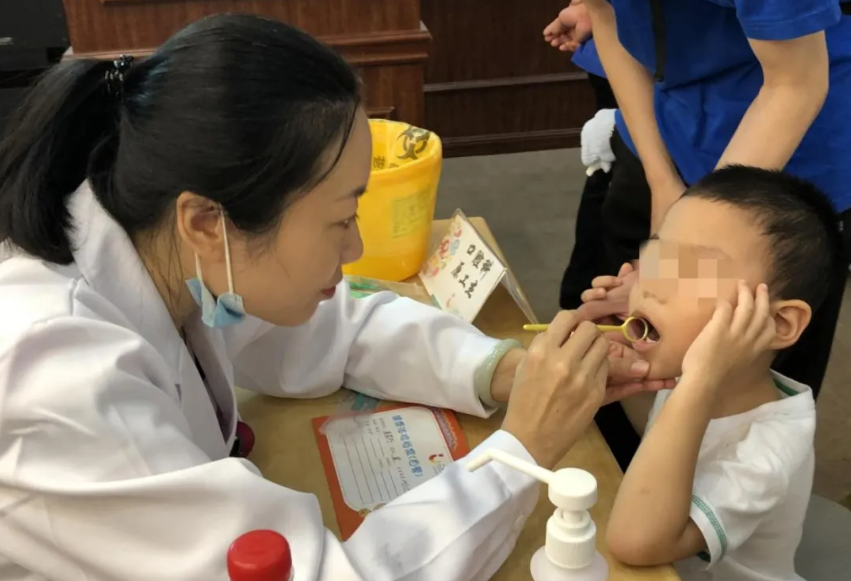
Dr. Yuan Gongjie | Children's Smiles, and the Orthodontist Who Still Tells Stories
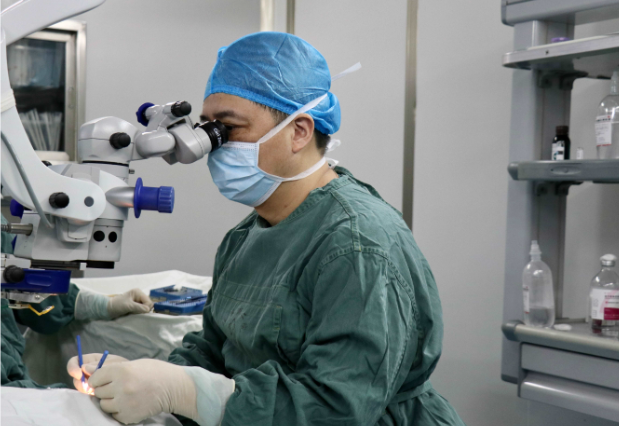
Dr. Wang Chaoyang | Vitrectomy, and Flowers Once Hidden in the Eye
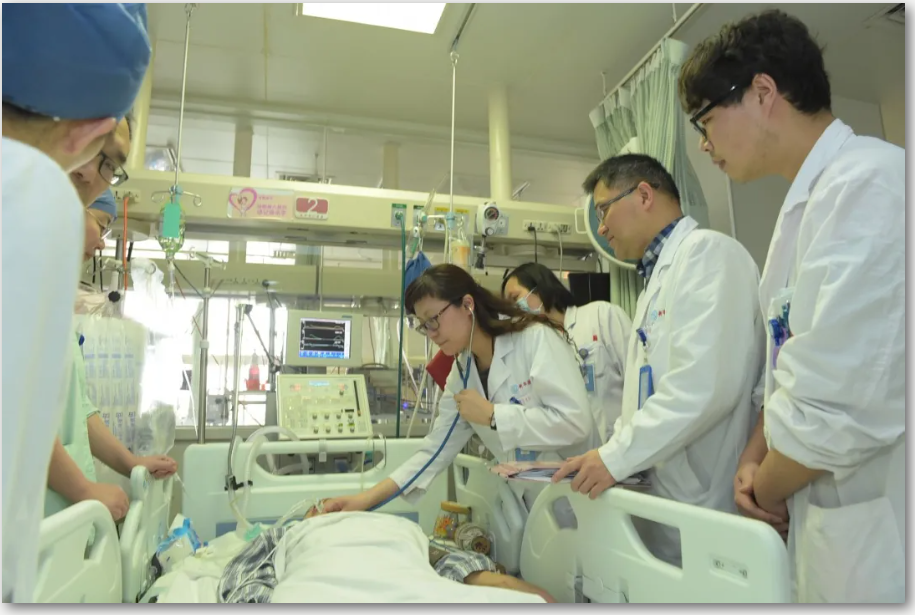
Dr. Fei Aihua | Emergency Medicine, and Striving to Win
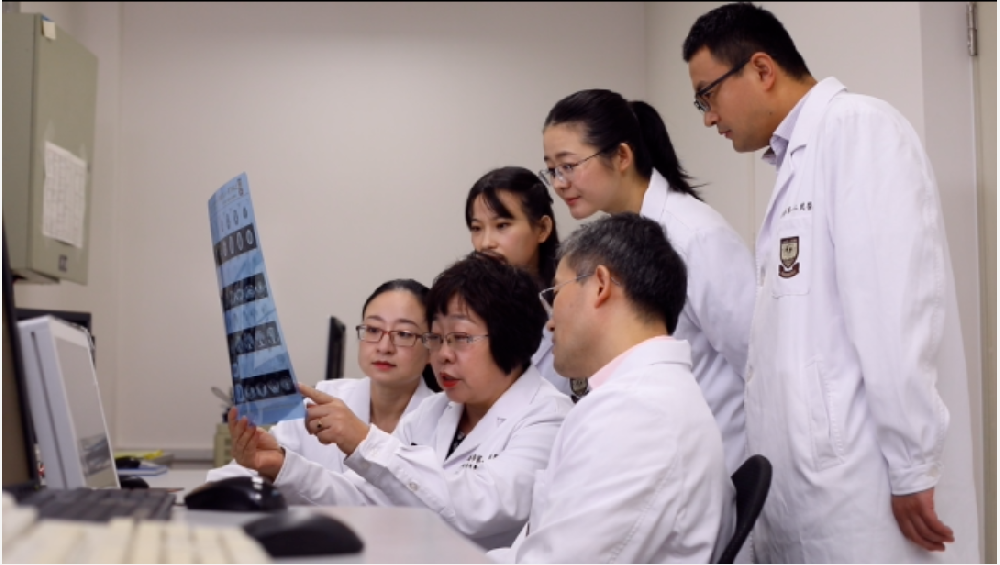
Dr. Zhao Jinhua | Nuclear Medicine, and the Flowers Along the Road
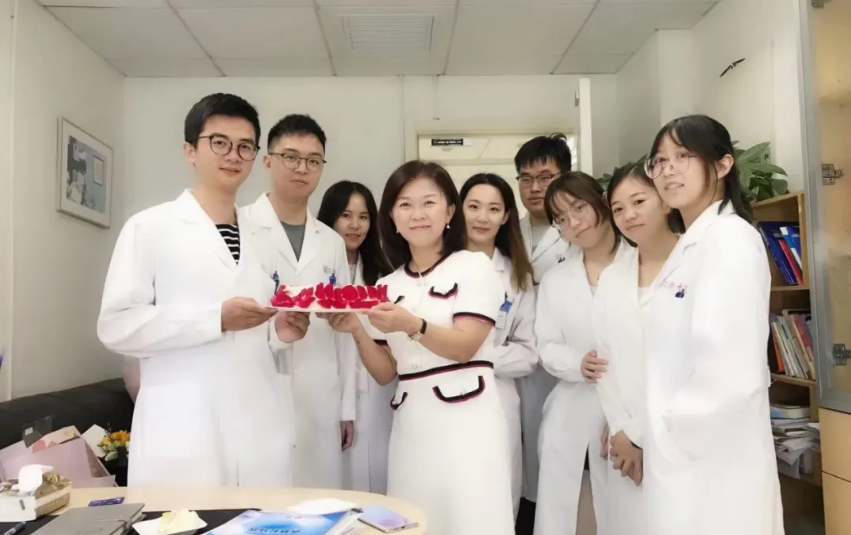
Dr. Shi Yuling | Psoriasis, and Spring Mountains Beyond the Plain
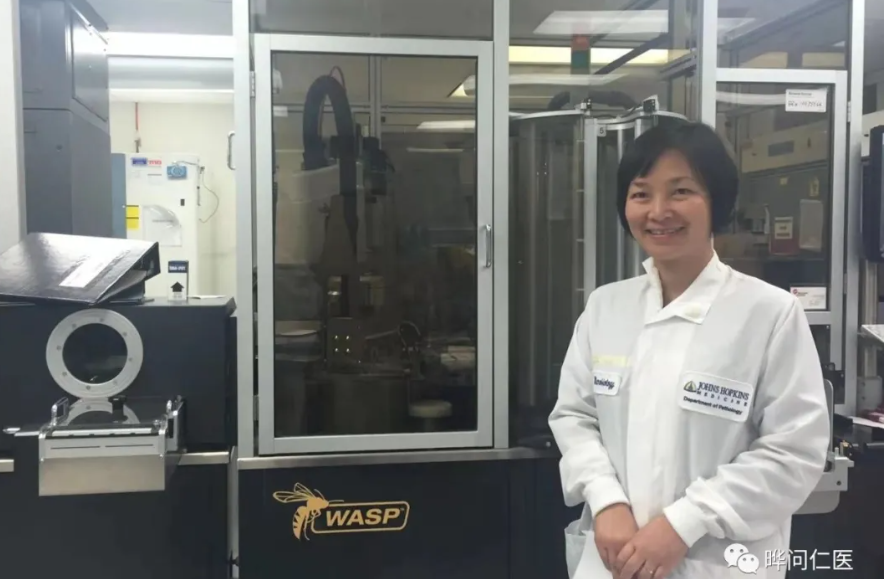
Dr.Ying Chunmei | Laboratory Medicine, Renewed a Little Every Day
Copyright © 2023 Yewen Renyi & ShanghaiDoctor.cn (This website is a non - profit medical humanities platform. The information contained herein is solely for biographical and historical purposes and does not constitute any medical advice.) 沪ICP备2023005392号-2 XML 沪公网安备31010902100835号
 中文
中文 English
 Español
 沪公网安备31010902100835号