ShanghaiDoctor - Where China's Healing Wisdom Shapes Modern Medicine

Update time:2026-09-27Visits:592
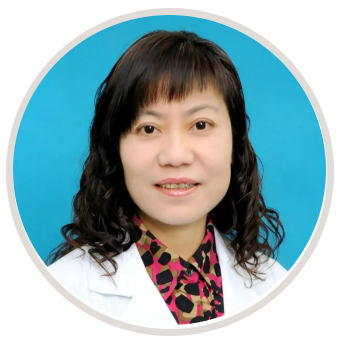
Professional Biography
Fei Aihua is Chief Physician and the working director of Emergency Medicine at Xinhua Hospital, affiliated with Shanghai Jiao Tong University School of Medicine. She graduated from Shanghai Second Medical University in 1991, spent more than a decade as a cardiologist, and moved to the emergency department in 2007, already past forty. In 2014 she took charge of the department. In 2019 she also became the first chair of the hospital’s general-practice service. She sits on critical-care and chest-pain committees of national physician societies and has written and translated chapters on acute care.
Xinhua’s emergency service is among the older departments of its kind in China, a national key clinical specialty, a chest-pain and advanced stroke center, the city’s hyperbaric-oxygen quality-control hub, a pediatric trauma base, and an early residency-training site. In the years covered by this interview the floor saw on the order of three hundred thousand visits a year, with an integrated path from the door through trauma and the ICU.
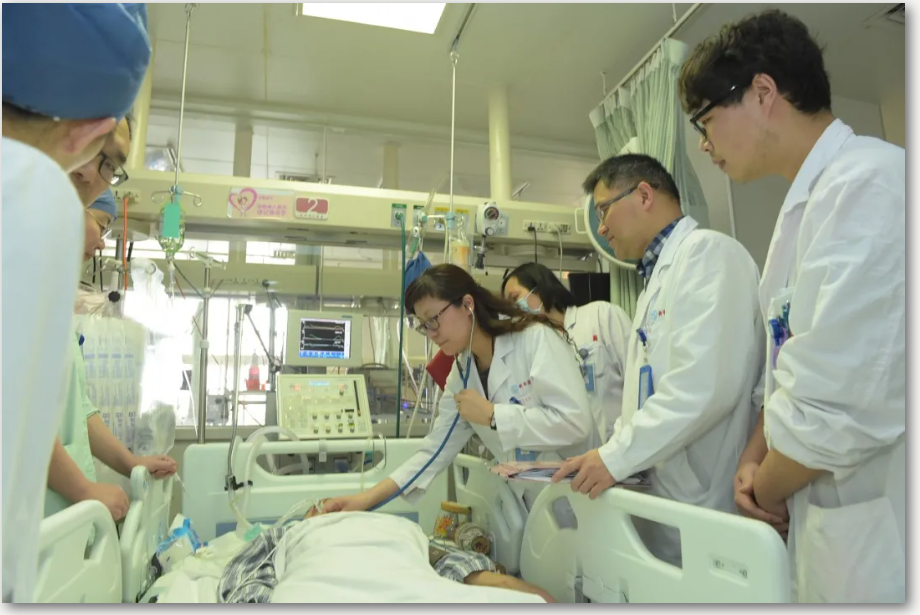
On night duty the pager could run until morning. She never wished it silent. A quiet night, she says, is a night from which a doctor learns nothing. Colleagues remember a habit that looked like reflex: rapid steps in the corridor, and she was already off the narrow on-call bed and through the door. When the resuscitation ended she lay down and slept at once. “I don’t keep jet lag. When it is time to sleep I sleep. When it is time to get up I get up.” She calls it the temperament that fits the emergency floor.
The 2007 transfer put that temperament where it belonged. She started again as an ordinary physician in the consultation room and the bay. The department was expanding—first chest-pain clinic in the city, national specialty status, stroke and trauma and hyperbaric work. In 2014 the “soldier,” in her own metaphor, became the person who had to keep the line standing. Seven subspecialties now sit under the same roof: emergency cardiology and resuscitation, acute stroke, trauma, epidemiology, organ support, critical infection, and emergency nursing.
Numbers from that period describe the machine more than the person: dozens of stroke thrombolyses a year, sixteen hundred hours of continuous renal replacement, more than three thousand bedside-ultrasound encounters, nearly ten thousand pediatric trauma visits, twenty thousand hyperbaric sessions. A three-in-one myocardial-infarction panel that once took an hour and a half was brought under twenty minutes. Stroke cases inside the window were tied to the city’s ambulance network so that a neurologist could meet the stretcher. More than eight hundred trauma patients a month; more than twenty serious pediatric cases a year.
The Shanghai branch of International Trauma Life Support trained more than a hundred and fifty pediatric emergency staff. She gives the credit to a hundred-person team, fifty-odd of them physicians.
Diversion, and the Case Nobody Named
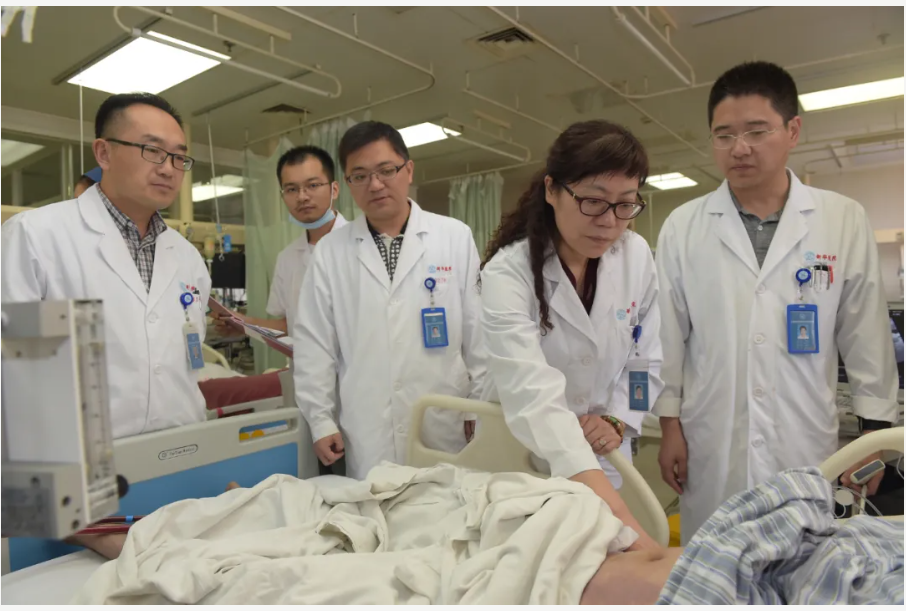
Command, in her telling, is first a matter of how you treat the people who stay. Emergency work produces setbacks and a particular fatigue. Different doctors need different handling. She calls herself the older sister in the room: recognize the load, and do not pretend it is light. Patients are another problem. A tertiary emergency floor cannot keep everyone. People with aspiration pneumonia or pressure-ulcer infection who will not turn around quickly belong, she argues, in a lower-acuity hospital that can keep them for weeks. After a family agrees she calls the receiving ward and still goes once a week to walk the beds.
The part of the job she likes talking about is the diagnosis that was missed. Colleagues call her the department’s Agatha Christie. An elderly man arrived comatose. Brain CT and the rest of the panel were clean. She asked about overdose. The family said no. She put down a gastric tube anyway. The fluid was full of sleeping pills. After blood purification he lived. An elderly couple came back again and again with blood in the urine and platelets on the floor; everything else looked fine. She said: test for rodenticide. It was. “Who put it there is for the police. My job is to know the list.” Gastrointestinal bleeding, severe pneumonia, respiratory failure, pancreatitis, ketoacidosis, acute coronary syndrome, pulmonary embolism, kidney failure—emergency medicine, she says, is shooting without a posted target. The “sharp eye” is only volume plus the habit of not trusting a normal film.
A patient on noninvasive ventilation for hypoxemia crashed in the ICU with a sudden drop in blood pressure and a normal electrocardiogram. She ordered a gastric tube. Coffee-ground fluid came back. He had bled, aspirated, and been labeled as a lung failure. History first, she tells students; images second. The more people standing around a hard case, the calmer she gets. Teaching at the medical school is the same lecture in a quieter room: skip the empty generalities, name the detail that is easy to miss, and go see the patient. Seeing the patient is comfort. It is also where the clue sits.
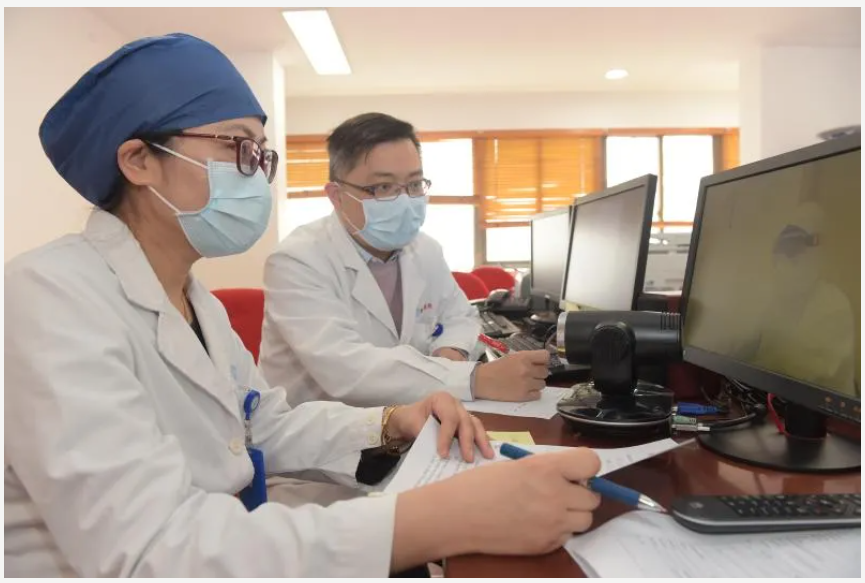
ShanghaiDoctor.cn: What did the cardiology years give the emergency work?
Fei Aihua: More than ten years on a heart ward is a store I still spend. Emergency physicians can feel like setters—stabilize, then hand the patient to a specialty. People ask where their own medicine went. One honest answer is to let emergency doctors keep a subspecialty. I came from cardiology, so clinic and research both have a grain I already own. We have seven tracks. Physicians and nurses pick one they can stand to live in, then mine the data, write, teach. That is how the department grew a teaching and research life instead of only a door.
ShanghaiDoctor.cn: Mass-casualty nights—what stays with you?
Fei Aihua: You stay reachable. I was out eating with family, the dishes already ordered, when the hospital called: a liquefied-gas explosion, several patients inbound. I left the table and set the rooms. Another night a swimming-pool chlorine leak sent dozens of adults and children at once. The bay was chaos when I arrived. We opened the incident plan, split the floor by zone, and ran a fast track. Years as a class officer taught the same muscle: decide, then move.
ShanghaiDoctor.cn: How do colleagues describe you?
Fei Aihua: When I see a mistake I say so in the room. They may find me strict. I would rather they take fewer wrong turns and grow fast enough for the place we actually work in.
ShanghaiDoctor.cn: Do you still have time that is yours?
Fei Aihua: My child is studying abroad, so some hours have come back. Most days I run for half an hour, use a hula hoop, do some yoga, read in the field or a short essay, watch a light series.
ShanghaiDoctor.cn: If you taught one class that was not your specialty, what would it be?
Fei Aihua: Goals. Every stage needs one. Students can aim to graduate well; then a major hospital; then a senior title. The point is not that the prize arrives on schedule. A direction keeps a person moving. After college some people drop the map and stall, while someone who started beside them is suddenly higher up the same stairs.
Fei Aihua: I watched the film Leap. Lang Ping asks Zhu Ting why she plays volleyball. Zhu Ting says, to become you—and hits the floor with the ball. That scene stayed. I asked what my first goal had been. I think I know. Life is not a guaranteed win. It is the attempt. Doctor or patient, once you are in the resuscitation room you try to win.
ShanghaiDoctor.cn: Have you reached the goals you set?
Fei Aihua: More than I asked for. If I can treat people with some gladness, pull a life back, and have them still come to see me after they leave, that is already the measure I wanted.
ShanghaiDoctor.cn: If you started again, what would you be?
Fei Aihua: A doctor and a lawyer. I like a chain of reasons, and I notice the weak joint in the other side’s story. If I were young now I might sit the bar as well. In a medical dispute I would like to think I would not lose.
ShanghaiDoctor.cn: From an emergency physician’s chair, what is medicine for?
Fei Aihua: First, treat the illness and keep the person alive. Then care, teaching, and research—in that order. Be a doctor first. Then hand the craft to students. If the room is still too small, write so the field can use it. Clinic is today. Teaching is tomorrow. Research is the day after.
Fei Aihua’s title is a volleyball film translated into a resuscitation bay. Life is not promised as a win; the work is to try. Her version is a pager she does not want silenced, a gastric tube placed against a family’s no, a couple whose platelets were rodenticide, a dinner abandoned for a gas explosion. Cardiology gave her a grain. Emergency medicine gave her the nights. The department’s numbers belong to a hundred people. The habit of waking at footsteps is still hers.
Editor: Chen Qing
If you need any help from Dr. Fei, please be free to let us know at Chenqing@ShanghaiDoctor.cn.
Dr. Yuan Gongjie | Children's Smiles, and the Orthodontist Who Still Tells Stories
Dr. Wang Chaoyang | Vitrectomy, and Flowers Once Hidden in the Eye
Dr. Zhao Jinhua | Nuclear Medicine, and the Flowers Along the Road
Dr. Shi Yuling | Psoriasis, and Spring Mountains Beyond the Plain
Dr.Ying Chunmei | Laboratory Medicine, Renewed a Little Every Day
Dr. Zhang Lei | Children's Airways, and a Preference for Being Plain
Dr. Chen Tongyu | Chest Surgery Without a Tube, and No Claim to Greatness
Dr. Hua Xiaolin | High-Risk Obstetrics, and a Child Worth Keeping
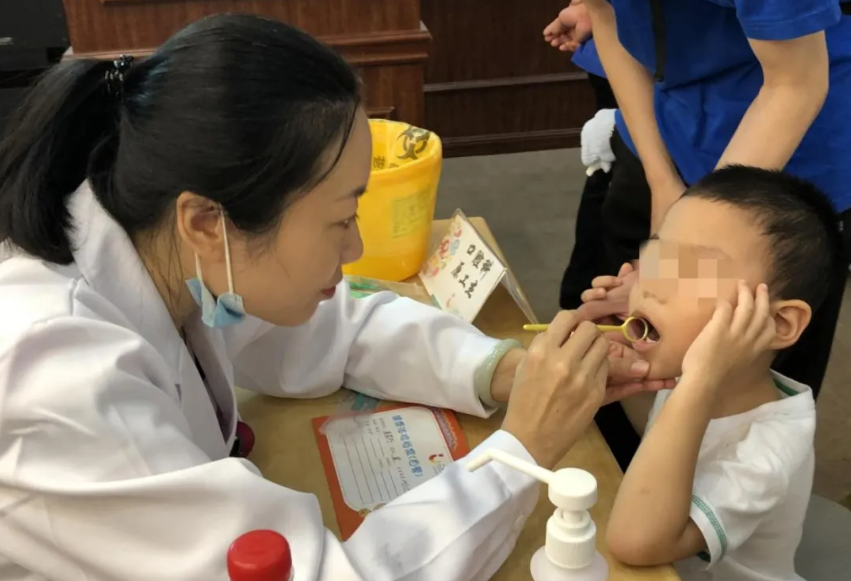
Dr. Yuan Gongjie | Children's Smiles, and the Orthodontist Who Still Tells Stories
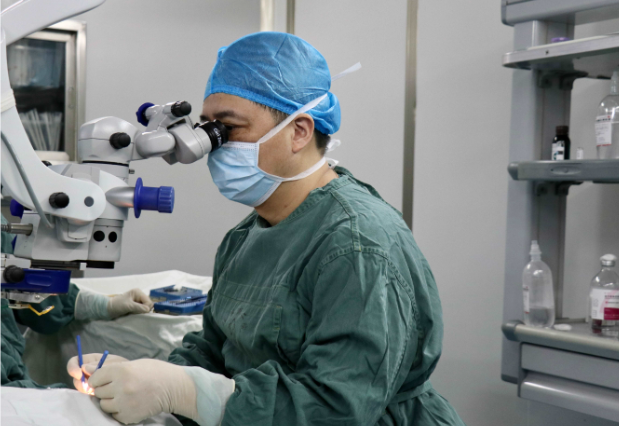
Dr. Wang Chaoyang | Vitrectomy, and Flowers Once Hidden in the Eye
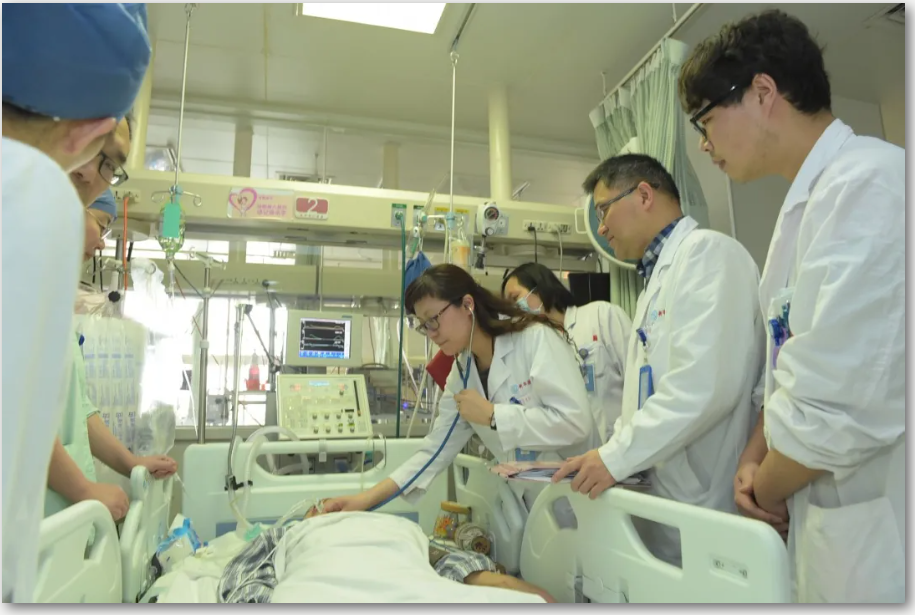
Dr. Fei Aihua | Emergency Medicine, and Striving to Win
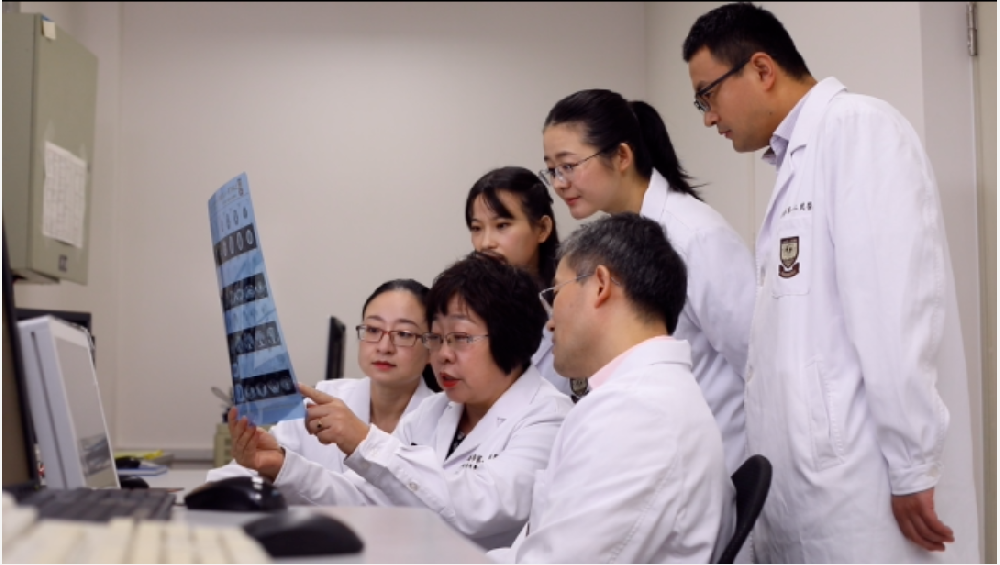
Dr. Zhao Jinhua | Nuclear Medicine, and the Flowers Along the Road
Dr. Shi Yuling | Psoriasis, and Spring Mountains Beyond the Plain
Dr.Ying Chunmei | Laboratory Medicine, Renewed a Little Every Day
Dr. Zhang Lei | Children's Airways, and a Preference for Being Plain
Dr. Chen Tongyu | Chest Surgery Without a Tube, and No Claim to Greatness
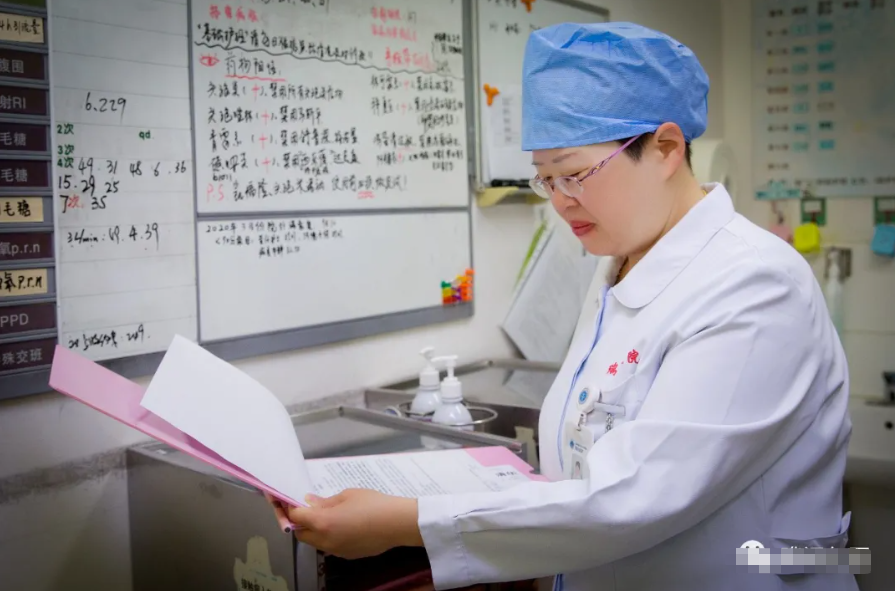
Cui Jie | An Infectious-Disease Nurse Who Kept Walking In
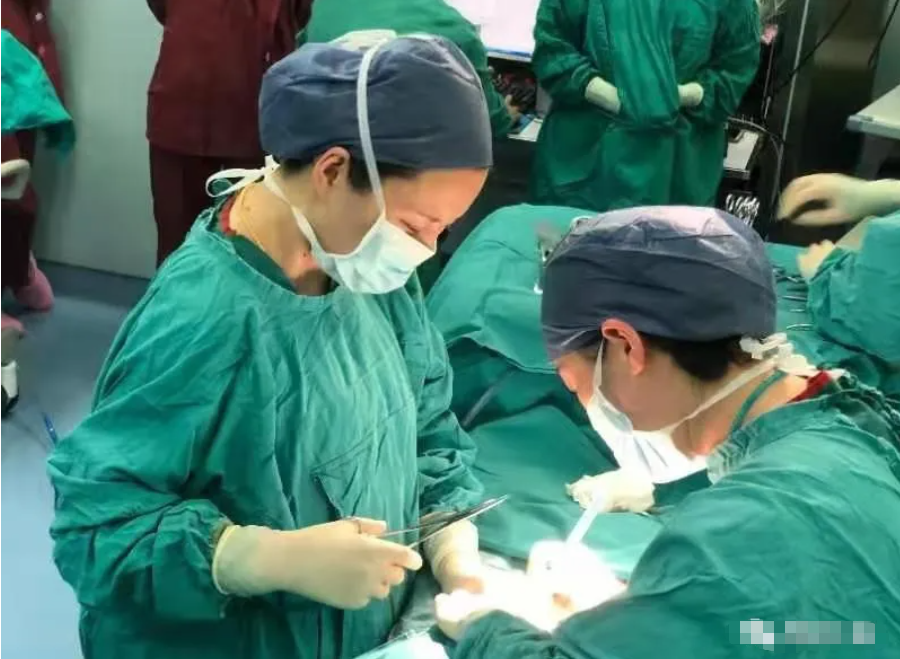
Dr. Hua Xiaolin | High-Risk Obstetrics, and a Child Worth Keeping
Copyright © 2023 Yewen Renyi & ShanghaiDoctor.cn (This website is a non - profit medical humanities platform. The information contained herein is solely for biographical and historical purposes and does not constitute any medical advice.) 沪ICP备2023005392号-2 XML 沪公网安备31010902100835号
 中文
中文 English
 Español
 沪公网安备31010902100835号