ShanghaiDoctor - Where China's Healing Wisdom Shapes Modern Medicine

Update time:2026-10-05Visits:375
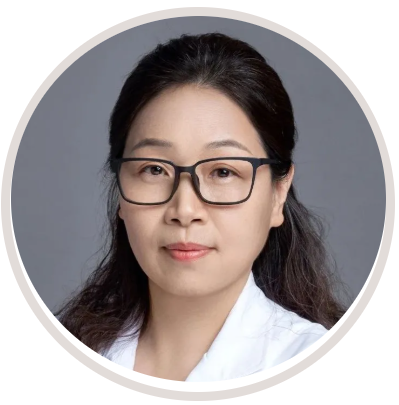
“Minimally invasive must not become a larger injury.”
— Zhu Zhiling
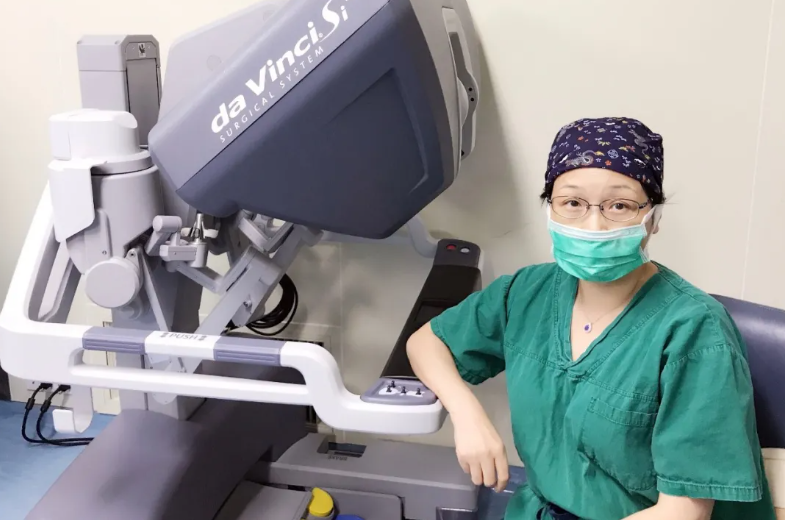
Zhu Zhiling is Chief Physician, Doctoral Supervisor, and Director of Integrated Chinese and Western Medicine at the Obstetrics and Gynecology Hospital of Fudan University, the Red House. She trained and still operates as a gynecologic surgeon. For more than thirty years the list has been tumors, endometriosis, infertility, prolapse, and the difficult benign and malignant cases that do not fit a single label. She does laparoscopic work and, when the anatomy asks for it, the da Vinci robot.
She is vice-chair of the obstetrics and gynecology branch of the Shanghai Association of Integrated Traditional Chinese and Western Medicine, and vice-chair of a reproductive-health drug committee under the China Association of Chinese Medicine. She has published more than twenty papers and led projects for the Shanghai Natural Science Foundation and the municipal health bureau. No long overseas training appears in her record. What colleagues remember instead is a holiday flight she changed three times so a patient she had only just met could still have the operation.
In 2005 the hospital needed a surgeon to lead a department that had been built around Chinese medicine—miscarriage care and menstrual disorders—while Western operations ran beside it. She took the post. Fifteen years on, the inherited work remains. She added postoperative urinary retention, lymphedema, and marrow suppression after chemotherapy, and split the staff so that operative gynecology and Chinese-medicine practice could each go deep and then meet on the same patient.
Chen Jingwen, head nurse of the department, walked a visitor to the gate and told three stories. A newly admitted woman whose picture kept changing. Zhu rewrote the operative plan more than once and changed an overseas holiday ticket three times so the case would not wait. The penalty on the tickets came close to the cost of the operation itself. On the day her own mother had heart surgery at Huashan, entrusted to a friend in cardiac surgery, Zhu was still at her own table. Leave the specialty to the person who owns it, she said. Hers was the patient in front of her. Patients tell the nurse that an uneasy walk to the clinic ends when they see the smile and hear the voice. The person in the interview room, for a little more than an hour, was unhurried. She had said she wanted to be an elegant woman. Elegance, in her definition, is not a copied manner. It is a face that has already held friendliness, helplessness, strength, pain, and joy, and has not traded them for a performance.
The surgical rule she will not bend is simple. As laparoscopy spread, more doctors and patients asked for the small incision. She kept saying that a small incision is not the goal. Some laparoscopic cases are so hard that bleeding and organ injury turn the small opening into a larger harm. Two things decide it: the patient’s body and disease, and the surgeon’s real skill. A para-aortic lymphadenectomy stays with her. Tumor in the nodes means taking the chain off the great vessels. Adhesions, or one wrong move, open a vessel. What tightens the room is not the blood. It is the next decision—stay laparoscopic, or open. Venous bleeding with a small tear she will finish through the ports. If the field will not dry, she opens. Both paths have happened. Both patients did well. She counts that as luck only in the sense that the choice was the right one.
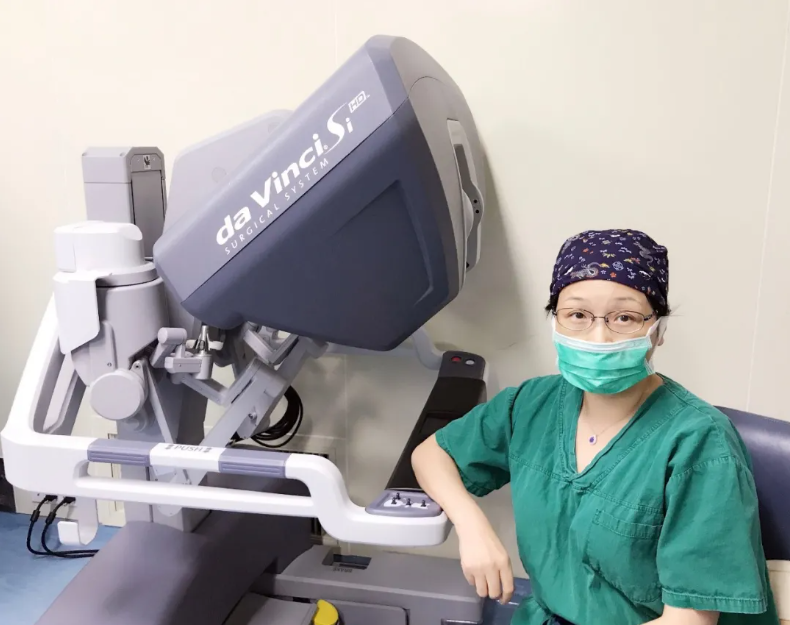
She came to Chinese medicine as a surgeon with a thin acquaintance and a department to run. What she found useful was not a replacement for the operation. After a cervical-cancer resection, some women cannot pass urine or gas. Acupuncture, in her ward, is used then as a supportive measure for bladder and bowel recovery, alongside ordinary postoperative care—not as a substitute for the surgery that removed the tumor. Chemotherapy patients with nausea, vomiting, and anxiety are another place she asks Chinese-medicine colleagues to help. She is plain that a mild imbalance may be approached with those methods, and that a serious structural problem still belongs to modern surgery and drugs. Where one side cannot finish the job, the other may ease what remains. The test she uses is the patient, not the pedigree of the method.
Eight beds on the Chinese-medicine side are mostly marrow suppression, urinary retention, lymphedema, and some ectopic pregnancies. Older work in the department had looked at Trichosanthes root in relation to pregnancy tissue; colleagues still ask how a drug might reach embryonic tissue more reliably. She treats that as an open research question, not a settled protocol. Tumor rehabilitation is the direction she wants next: support during chemotherapy, recovery after the operation, the human interval that a pathology report does not cover. Pulse-taking and a long inquiry, she thinks, give some patients a kind of trust that a scan alone does not. She does not claim the department has arrived. She says she is no longer a bystander.
ShanghaiDoctor.cn: Do you remember your first operation?
Zhu Zhiling: In my first year as a resident I did a total hysterectomy. At that stage we were meant to do simpler cases, removal of the adnexa. A hysterectomy counted as major. Hua Keqin guided me through it. It went well. Afterward she was criticized, because I was not yet qualified. She said nothing to me about it and treated me as before. I am still grateful.
ShanghaiDoctor.cn: What were you like as a resident?
Zhu Zhiling: Young people do not tire. I do not know where the drive came from. A fine hospital, fine teachers. I did not want to waste it. The rule was thirty ordinary births before a difficult one. Off duty, if a baby was coming at night, I asked the nurses to call. I did not dare a deep rest. The call came and I was out of bed and glad to go.
ShanghaiDoctor.cn: What do you do before an operation?
Zhu Zhiling: Assess the patient. Talk to the team. Surgery is the whole room. My assistants are the same people. If something unexpected happens, we already know the next hand.
ShanghaiDoctor.cn: What do you say to patients most often?
Zhu Zhiling: Don’t worry. Don’t be anxious. If I can solve it, I will try. A hospital is a small society. Some illnesses carry a marriage, a family, a thing the patient will not say. Treat the disease and also the mind. Guide where you can. Cut the misunderstandings that come from a bad conversation.
ShanghaiDoctor.cn: How do you lead a team from two cultures?
Zhu Zhiling: Twenty-six people, each with a skill. We grow what they are already good at. Different trainings are not the problem if the values match. What I cannot stand is a lack of integrity. Credibility is as serious as a life. A doctor’s floor is conscience. However powerful a patient is outside, in the hospital they are exposed. Stand in their place.
ShanghaiDoctor.cn: What is a good operation, and how do you talk with patients?
Zhu Zhiling: We want the whole perioperative stretch, not only the hour in the theater. A clear diagnosis first. Then the plans, with what each costs and what each gains. Then a recommendation. For fibroids, keep the uterus or take it: age, fertility, other illness, what the woman herself needs. When she understands, give her time. During treatment, keep talking, and take the fear down a step at a time. Afterward, follow-up, including online, so she knows the next thing. Women in this clinic often think further and feel more. I guide slowly, with voice and with eyes.
ShanghaiDoctor.cn: Can you decide when you leave in the evening?
Zhu Zhiling: No. My own case may run late. If someone else in the department has a hard one, I am there. I have to cover them.
ShanghaiDoctor.cn: How do you come down from the fatigue?
Zhu Zhiling: Films, exercise, a stretch of weather when there is time. I read English novels, especially ones about medicine. Twenty years ago the first was a science-fiction story about brain surgery done from a capsule that traveled the veins, with contrast to mark normal tissue from abnormal, and a small suction for the blood. It felt like a myth. Some of that myth is now ordinary equipment. Twenty years in this work went fast. You have to keep after it.
ShanghaiDoctor.cn: You see women every day. When is a woman most beautiful?
Zhu Zhiling: Beauty is relative. Looks matter. For a woman my age, in this work, I care more about the temperament that comes from the inside: knowledgeable, mannered, able to read a situation and a person. When there are books in the mind, the face changes.
Zhu Zhiling’s road, as she names it, is the one that stays broad if the first intention holds. In the operating room the intention is a limit: a small incision is not a virtue if the patient bleeds more for it. Outside the theater it is a ticket changed three times, a mother left to the cardiac surgeon who knows that work, a department of twenty-six asked to keep two kinds of training and one conscience. She does not claim the combination has finished anything. She claims she is in it.
Editor: Chen Qing
If you need any help from Dr. Zhu, please be free to email us at Chenqing@ShanghaiDoctor.cn.
Dr.Sun Jing | Fertility-Sparing Surgery, and a Future Already Here
Dr. Li Qingyun | Sleep Apnea, and Illness Removed Without a Sound
Dr. Zhu Zhiling | Gynecologic Surgery, and a Line She Would Not Cross
Dr. Yuan Gongjie | Children's Smiles, and the Orthodontist Who Still Tells Stories
Dr. Wang Chaoyang | Vitrectomy, and Flowers Once Hidden in the Eye
Dr. Zhao Jinhua | Nuclear Medicine, and the Flowers Along the Road
Dr. Shi Yuling | Psoriasis, and Spring Mountains Beyond the Plain
Dr.Ying Chunmei | Laboratory Medicine, Renewed a Little Every Day
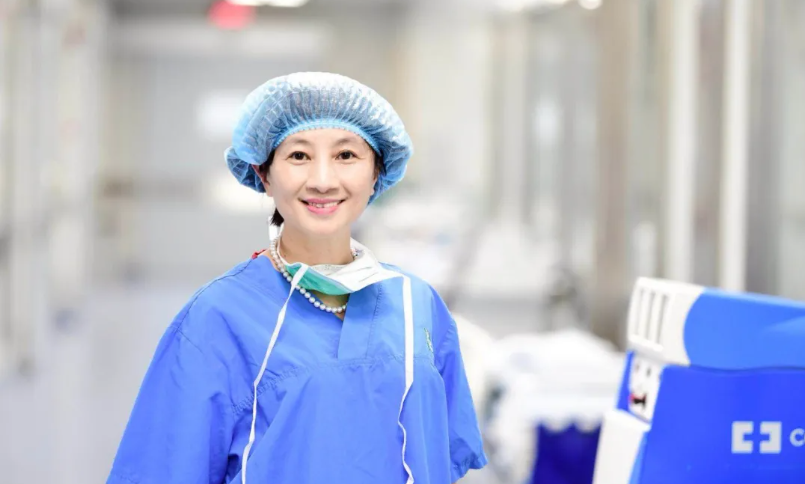
Dr.Sun Jing | Fertility-Sparing Surgery, and a Future Already Here
Dr. Li Qingyun | Sleep Apnea, and Illness Removed Without a Sound
Dr. Shen Qian | Children’s Kidneys, Lucid and Gentle
Dr. Zhu Zhiling | Gynecologic Surgery, and a Line She Would Not Cross
Dr. Yuan Gongjie | Children's Smiles, and the Orthodontist Who Still Tells Stories
Dr. Wang Chaoyang | Vitrectomy, and Flowers Once Hidden in the Eye
Dr. Fei Aihua | Emergency Medicine, and Striving to Win
Dr. Zhao Jinhua | Nuclear Medicine, and the Flowers Along the Road
Dr. Shi Yuling | Psoriasis, and Spring Mountains Beyond the Plain
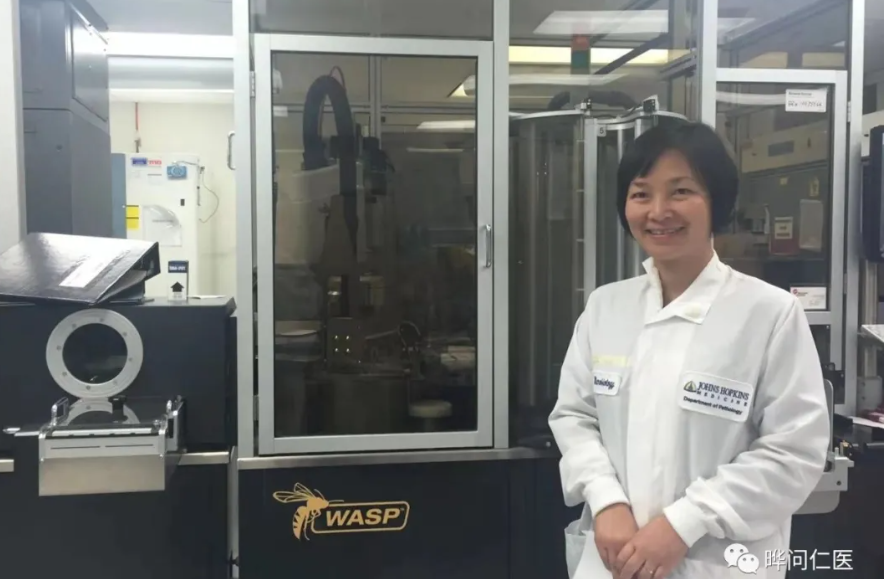
Dr.Ying Chunmei | Laboratory Medicine, Renewed a Little Every Day
Copyright © 2023 Yewen Renyi & ShanghaiDoctor.cn (This website is a non - profit medical humanities platform. The information contained herein is solely for biographical and historical purposes and does not constitute any medical advice.) 沪ICP备2023005392号-2 XML 沪公网安备31010902100835号
 中文
中文 English
 Español
 沪公网安备31010902100835号