ShanghaiDoctor - Where China's Healing Wisdom Shapes Modern Medicine

Update time:2026-10-05Visits:390
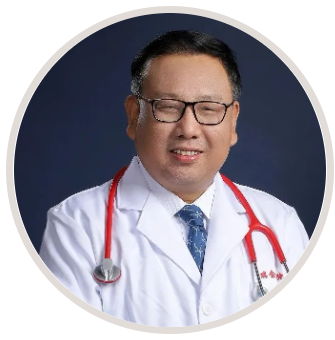
“A good doctor takes a cloud of words and leaves one sentence that actually works.”
— Li Qingyun
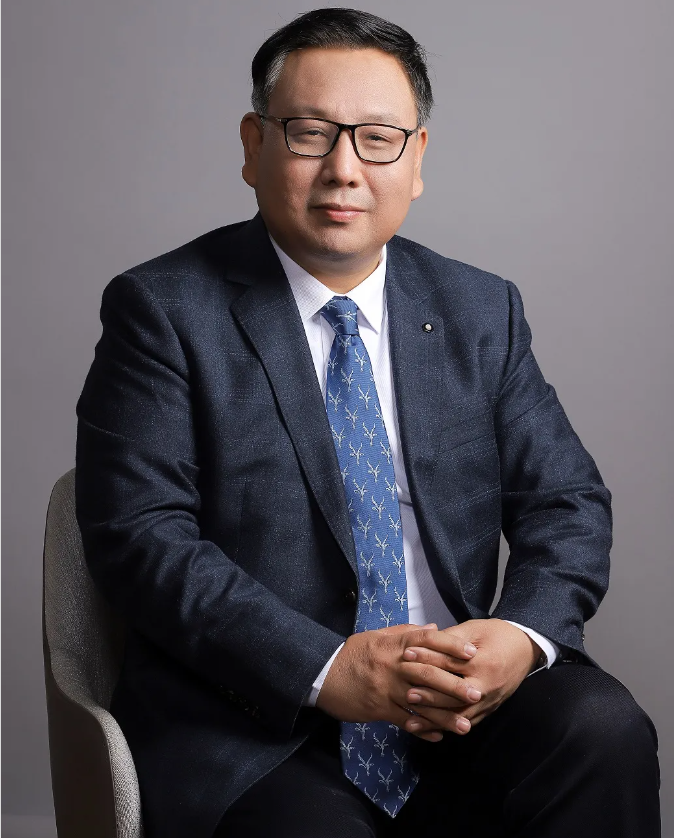
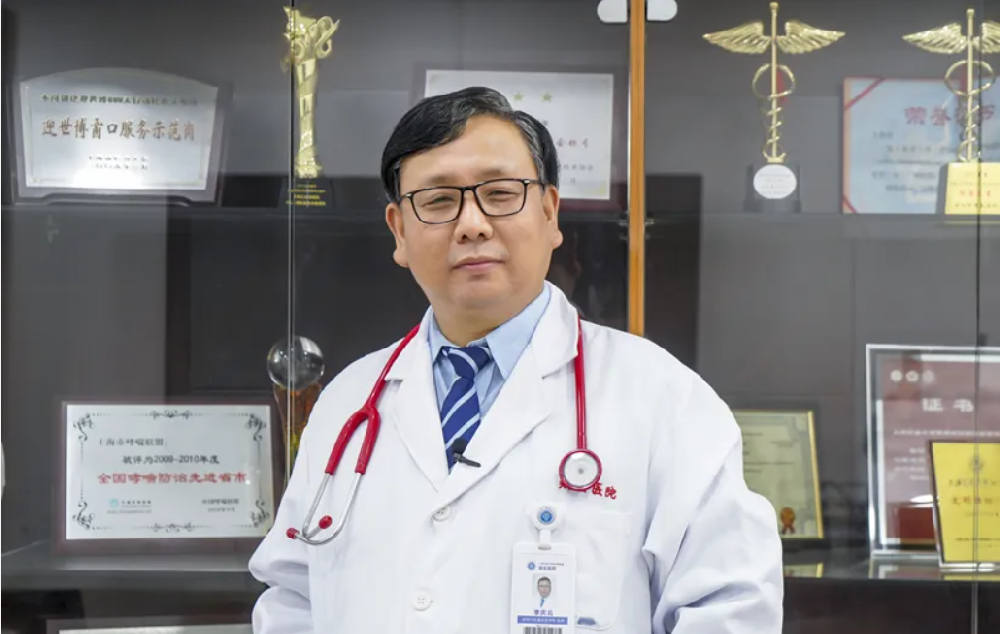
Li Qingyun is Chief Physician, Professor, and Doctoral Supervisor, and Deputy Director of Respiratory and Critical Care Medicine at Ruijin Hospital, Shanghai Jiao Tong University School of Medicine. He also serves as deputy director of the university’s Institute of Respiratory Diseases and leads work on sleep-disordered breathing. Born in 1968 in Yangquan, Shanxi, he treats obstructive sleep apnea and the illnesses that travel with it—obesity-related hypoventilation, nocturnal high carbon dioxide, pulmonary hypertension, COPD with apnea—and the harder end of respiratory failure, mechanical ventilation, asthma, and lung infection.
He has chaired the sleep-medicine committee of the Chinese Medical Doctor Association and the sleep group of the Shanghai respiratory society, and has served as president of the Chinese Sleep Research Society’s relevant committees. A 2002 Shanghai survey he organized—more than 8,000 people approached, 6,826 usable records, with Ninth People’s, Sixth People’s, and Zhongshan hospitals—was among the first large Chinese counts of sleep apnea. He has led or joined national science grants and ministry planning projects, published on the order of two hundred papers, and edited or co-edited more than twenty books, including a translation of a work on vertebrate respiratory physiology. A period as senior visiting scholar at the University of Pennsylvania is the only extended stay abroad.
In early 2020 he led the third Shanghai medical team sent to Wuhan and stayed nearly two months on the wards. The deployment is part of the clinical record, not a separate story from the rest of the work: night hypoxia, ventilation, and the question of who is still breathing in the morning.
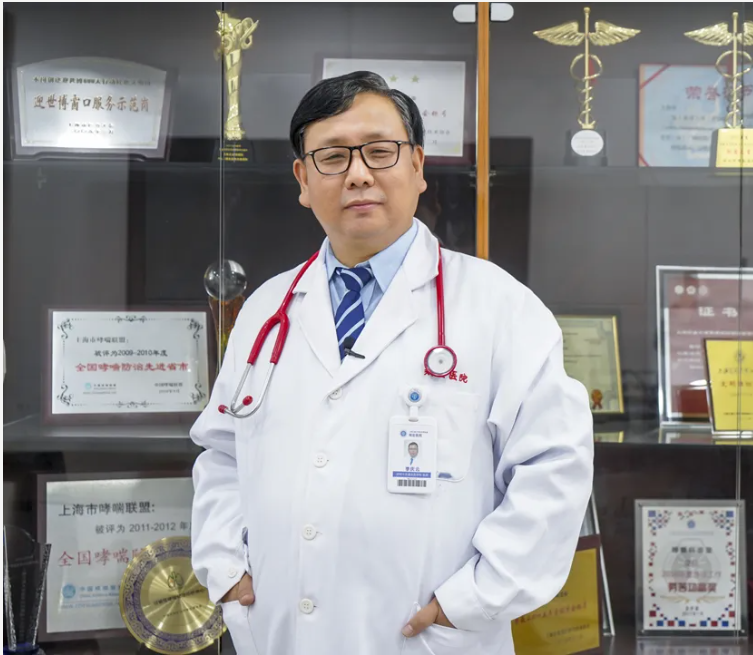
The banner he keeps is not the usual gold-on-red thanks. A civil servant in his early thirties had come in with a swelling abdomen and swollen legs, labeled “effusions in several body cavities,” and had already walked through hospitals without a name for the illness. Li asked for an echocardiogram. Both ventricles were enlarged. Pulmonary artery pressure was high. The driver was obesity and long nocturnal hypoxia—a breathing problem wearing the clothes of heart failure. In less than a week the swelling eased. At one month the pressure had fallen and he was back at work. At two months the pressure was normal. The patient said that outside the room he had been given every term and no result; one judgment had done the work. Li had wanted that sentence since internship, when a supervising physician cut a case down to a single usable line and the medicine then worked.
Colleagues had not understood the choice of respiratory medicine. An old line said court physicians do not treat wheezing, because wheezing makes them look foolish. Most of the men in his class went to surgery or the heart. He asked who would take the ward if everyone left. Difficult work, he thought, was exactly the reason to stay. Thirty years later the hard cases still arrive as riddles. A man of thirty-one, Xiao Wang, had gone into a coma with convulsions in his sleep—acute hypercapnic coma. A local hospital opened the trachea and put him on a ventilator. By day he was himself. At night carbon dioxide rose, and the tube stayed. Seven months of hospitals, and no one would take it out. Li named a rare sleep-related alveolar hypoventilation syndrome, put a broad hand on the man’s shoulder, and said the tube would come out. It did.
Other files sit beside that one: a pulmonary embolism nearly missed, a foreign patient named Chris with chest pain and fever who almost lost the window for treatment, families who stopped because the bill for invasive ventilation had already reached nearly a million yuan. Sleep-disordered breathing is still poorly known, even among some physicians. Adult prevalence is often cited near 4 percent in men and 2 percent in women; a later national figure he quotes is more than 65 million people. The mechanism is partial or complete upper-airway closure in sleep, recurrent low oxygen, high carbon dioxide, a sympathetic surge, broken sleep. Daytime sleepiness and fogged thinking follow, and so can hypertension, coronary disease, heart failure, diabetes, stroke, road crashes, and nocturnal sudden death. Newer work links it with cancer. Obesity and apnea feed each other. Perioperative risk in an obese patient is often a night problem that looks normal at noon. Screening, he argues, has to happen before the operating list.
Using a tool, in his distinction, is doing what the book already says. Making a tool is turning a ward habit into something other rooms can use. Over five years the group built carbon-dioxide monitoring during sleep, polysomnography synced to that monitor, and synced blood-pressure recording, and pushed a practical path for noninvasive ventilation when COPD and obstructive sleep apnea sit in the same patient. He has argued in public for a multidisciplinary read of apnea, for the full spectrum of sleep-disordered breathing, for the tie to other lung disease, for the respiratory control center, and for clinical subtypes—and, in the lab, for biomarkers, vascular injury, and the cancer link.
In Wuhan the same habit continued. Fifty-five days of wards and meetings. The words most often written on his suit were the two characters for “overcome.” Asked later if he had been afraid, he said he was not afraid of the illness. He was afraid of folding from fatigue, because the patients and the team still needed a standing person. Younger staff on four-hour rotations, without a full day off, hit a wall he had not seen in them before. He answered with humor and a level voice. They started calling him Grandpa Li. Graduate students still in class at home were pulled into the problems of the ward. Two patent filings came out of that stretch: a throat swab meant to limit droplet spread and to light the field, and a system for mapping how aerosols travel, how far, and how long they hang in the air.
He is fifty-two in the year of the interview and still walks the exhibition floor at meetings. A portable ultrasound, not long ago, he carried off like a found instrument. He wants seventy-two hours in a day for clinic, research, students, and free clinics in smaller cities. One breath, he says, is enough time to open a path. He does not claim to know what a flower or a swallow does in that interval. He knows the work is to keep the airway open.
ShanghaiDoctor.cn: How did you come to medicine?
Li Qingyun: I was born in 1968, in Yangquan, Shanxi. The Li clan is large there, and almost every generation has had someone in medicine. I thought the work would let me finish something. People say medicine is hardship. That was fine. I seemed cut out for it. At Shanxi Medical College, by the end of the first term, a thick stack of books was readable and stayed in the head. That pleasure held. The college at night was full. At eight or nine you could not find a seat in the reading room, and I was too embarrassed to go back to the dormitory early. After graduation I worked six years at Yangquan First People’s Hospital.
ShanghaiDoctor.cn: How did you decide on Shanghai?
Li Qingyun: The hospitals in Yangquan had thin libraries, old collections, few ways to hear what was new. Clinical skill stalled. By the third year I knew I had to leave. During the internal-medicine rotations, few people wrote. I wrote a review on fluoroquinolones and it was well received. For a young doctor that was fuel. After a training spell at Ruijin I sat the graduate exam. My supervisor was Huang Shaoguang, director of respiratory medicine there. In 2001 I joined the staff. At Ruijin an idea could find hands. The hospital’s store of work was deep, and the research bench was among the strongest in the country. I admired that.
ShanghaiDoctor.cn: After thirty years, what should a respiratory doctor have?
Li Qingyun: First a doctor, then an internist, then a respiratory physician. A subspecialty is only the place you look harder. Skip the order and the view goes narrow. When we rotated as residents, the training was built that way.
Li Qingyun: The last time I did a free clinic in Kashgar, a woman held out a lab sheet and said she was short of breath. Her face was the color of paper. I asked if she was anemic. Yes. Uterine fibroids? Yes. Had a surgeon advised an operation? Yes, and she had refused. I told her to listen. The fibroids were driving the anemia, and the anemia was driving the breathlessness. It was not a disease of the airway. She had come in for breath, but you cannot stop at the airway. You have to know what else makes a person short of air.
ShanghaiDoctor.cn: How many people in China have sleep-disordered breathing?
Li Qingyun: Last year’s figures put it above 65 million. In 2002 we ran the first large Chinese survey, with Ninth People’s, Sixth People’s, and Zhongshan. More than 8,000 people across the districts, 6,826 usable records. Ten days behind a closed door, and the report was done. In that Shanghai sample the rate sat near 4 percent.
Li Qingyun: Too few people now study respiratory physiology. I recently translated a book on how vertebrates breathe—why a bird can fly at 5,000 meters, why a turtle can swim deep, why either can still take air when oxygen is thin. Medicine needs a wider frame. Every investigator should move the field a step, cross a border, and keep the fundamentals. Some fundamentals are still open. The tools race ahead, and then you ask what is left. If there is no new antibiotic, what then? You study the host.
ShanghaiDoctor.cn: How do you treat sleep-disordered breathing?
Li Qingyun: For obstructive sleep apnea, noninvasive ventilation is first. Weight loss matters. So does lying on the side. So does stopping tobacco and alcohol. Many deaths in young and middle-aged people after drinking are this disease. Plans differ by person. The department has taken difficult cases from across the country.
ShanghaiDoctor.cn: What is your view of taking on difficult cases?
Li Qingyun: Four things: courage, judgment, responsibility, and the willingness to answer for the result. Taking the case is courage. Courage without a plan is not enough. On the illness itself you have to answer at once, condense a thousand words into one sentence, and speak to the point. The decision rests on responsibility. That is the bearing a doctor at a major hospital owes.
ShanghaiDoctor.cn: How do you train students?
Li Qingyun: From practice to theory, and back to practice. When students arrive for a clerkship, the first question I ask is what philosophy is. Real philosophy, as I put it to them, is a worked-out view of the world and a method. Without that, the work does not hold.
Li Qingyun: I use the P4 frame: predictive, preventive, personal, participatory. When a patient sits down you already make a guess. If the guess has weight, you act before the risk arrives. The same disease is not the same person. Family and patient have to be in the fight.
Li Qingyun: Everyone has a strength and a gap. Among any three people there is one I can learn from, including a student. Respect has to be earned both ways. I do not want them to treat me as a model. I want them to catch a spirit. Since Wuhan, every sentence has carried more feeling. On arrival we were given a line to learn: if it serves the country, do it even at risk to your life; do not step aside for private fortune or misfortune. Everyone thinks of a spouse and children. I have parents in their eighties. That is ordinary feeling. In an outbreak there is no time to sort it first. Do the work, then think. That is the spirit I mean.
ShanghaiDoctor.cn: How do you understand life?
Li Qingyun: It is extremely precious. Coming into the world brings duties—to elders, to the young, to teachers, to students, to patients. A fusion of duties. Even at a hundred you still have them, because the people after you hope you are still here. Being alive is itself a form of respect. Birth, aging, illness, and death are the law. Our job is to lessen what disease takes from the years and from the quality of those years, and to keep from adding harm.
Li Qingyun’s work sits in the interval most people do not watch: the breath that fails only after the lights go out. A swollen belly that was nocturnal hypoxia. A tracheostomy that did not have to be permanent. A woman in Kashgar whose shortness of breath was fibroids and anemia. Noninvasive ventilation, weight, side-sleeping, no alcohol. The banner on the wall says a good doctor removes illness without a sound. He still wants the one sentence that does that, and the tool that lets another doctor say it.
Editor: Chen Qing
If you need any help from Dr. Li, be free to let us know at Chenqing@ShanghaiDoctor.cn.
Dr.Sun Jing | Fertility-Sparing Surgery, and a Future Already Here
Dr. Li Qingyun | Sleep Apnea, and Illness Removed Without a Sound
Dr. Zhu Zhiling | Gynecologic Surgery, and a Line She Would Not Cross
Dr. Yuan Gongjie | Children's Smiles, and the Orthodontist Who Still Tells Stories
Dr. Wang Chaoyang | Vitrectomy, and Flowers Once Hidden in the Eye
Dr. Zhao Jinhua | Nuclear Medicine, and the Flowers Along the Road
Dr. Shi Yuling | Psoriasis, and Spring Mountains Beyond the Plain
Dr.Ying Chunmei | Laboratory Medicine, Renewed a Little Every Day
Dr.Sun Jing | Fertility-Sparing Surgery, and a Future Already Here
Dr. Li Qingyun | Sleep Apnea, and Illness Removed Without a Sound
Dr. Shen Qian | Children’s Kidneys, Lucid and Gentle
Dr. Zhu Zhiling | Gynecologic Surgery, and a Line She Would Not Cross
Dr. Yuan Gongjie | Children's Smiles, and the Orthodontist Who Still Tells Stories
Dr. Wang Chaoyang | Vitrectomy, and Flowers Once Hidden in the Eye
Dr. Fei Aihua | Emergency Medicine, and Striving to Win
Dr. Zhao Jinhua | Nuclear Medicine, and the Flowers Along the Road
Dr. Shi Yuling | Psoriasis, and Spring Mountains Beyond the Plain
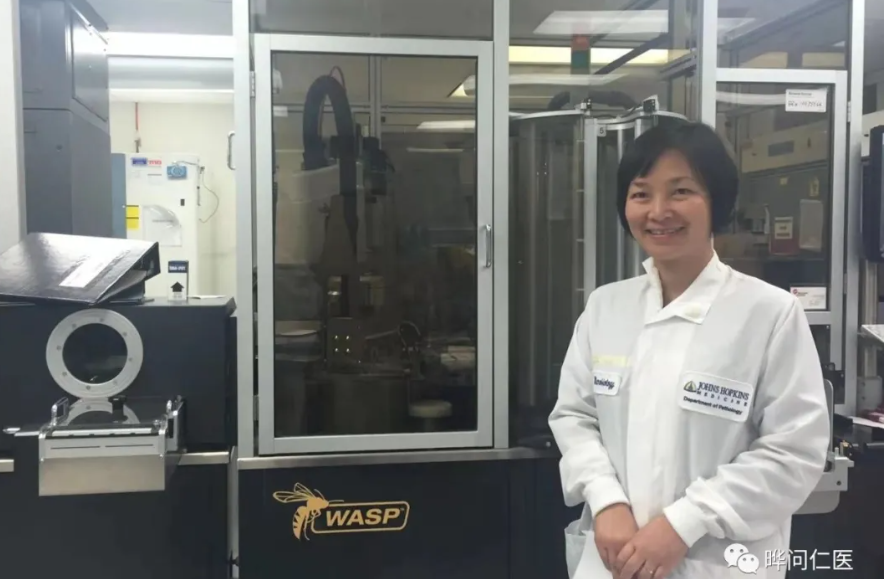
Dr.Ying Chunmei | Laboratory Medicine, Renewed a Little Every Day
Copyright © 2023 Yewen Renyi & ShanghaiDoctor.cn (This website is a non - profit medical humanities platform. The information contained herein is solely for biographical and historical purposes and does not constitute any medical advice.) 沪ICP备2023005392号-2 XML 沪公网安备31010902100835号
 中文
中文 English
 Español
 沪公网安备31010902100835号